Creative Writing Meets Fashion Design

Last weekend, I had the pleasure of attending the 15th Annual Ankara Festival in Hollywood, CA for my third or fourth time. I enjoyed taking in the African fashion created by designers from Ethiopia, South Sudan, USA, Nigeria, Congo DR, Sierra Leone, and Cameroon.

While attending, I deliberately made the following connections between fashion design and creative writing:

Embodying your narrative. (Just like fashion designers when they create a collection; just as models do when they approach the runway.) It’s important, as you write, to show your characters (including you, if memoir) feeling the chill of the air, the rough sand particles at the beach. For writing, we find these ideas in the book Body Work by Melissa Febos and in the instructional resources at Corporeal Writing.

Use descriptive imagery. (Fashion designers are masters at this because fashion is all about image.) But also appeal to your readers’ sense of smell, taste, sound, and touch.

A beat is a major turning point in narrative. It’s also the make your point moment. (Just as models stop at just the right moment to capture an audience’s attention, take advantage of your beats.)

Publishing

Research your comparable/competitive titles when publishing a book. Check your local bookstores, bookstore websites, and Publishers Weekly.

Know your audience. Who are you writing for? How can you connect with them and stay connected? (Fashion designers know who they are designing for.)

Work with your team – editors, agent, publishers. (Like writing, fashion is teamwork.)

Can I Really Pitch This Book? — Black Writers Weekend, Atlanta

I recently returned from Black Writers Weekend (Aug. 1-4, 2024) in Atlanta where I participated in their Pitch Fest.

My biggest takeaway was that I needed to embody my logline – that one-sentence synopsis of my hybrid memoir that reveals the central conflict in the manuscript. Embody how, you might ask? I have to walk in a room and incorporate the three selves of my memoir – the writer, the character in the scenes, and the reflective narrator (Kate Bannon) and convince my listeners that my book is worth their time.

What is Black Writers Weekend?

Black Writers Weekend is a four-day event that brings together authors, screenwriters, and media professionals for a bookfair and a series of panels, discussions, and movie viewings. Founded by writer Tamika Newhouse in 2008, the festival has been held annually in Atlanta since 2014.

My Logline

I started writing the logline for my hybrid memoir in 2022 during a UCLA Extension class titled Conquering Your Story and Its Superstructure with Steven Wolfson. The challenge I’ve faced in writing my logline has been incorporating the history of Black Los Angeles with my personal narrative about being a writer. My memoir structure is hybrid/researched, and my manuscript isn’t just about me. It’s about the experience of writing bilingual poetry in a city with a distinct history.

Since the 2022 course, I’ve continued to refine my logline. And I don’t think my current version will be the last. Each class I take, along with each event I attend, encourages me to revisit my logline and perfect it.

The logline is not only essential for querying and pitching, it also has helped me stay focused while writing.

The Foundation

Some other courses I have taken that have helped me refine my query and pitch include Query Your Memoir with Allison K. Williams, Writing and Pitching Hybrid Memoir with Courtney Maum, and The Query Workshop with Mary Alice Stewart of the Shipman Agency.

The Challenge

Black Writers Weekend required book writers to write and send in a description of their project if we were going to participate in Pitch Fest. My goal in participating was to challenge myself to pitch in person and then receive the bonus of immediate feedback. To write my description, I referred to the notes from the courses I had taken and the workshops I’d attended. And to pitch in person, I read three articles on the Jane Friedman website – “How to Pitch Agents at a Writers Conference,” “How to Pitch Like a Hollywood Pro,” and “The Power of Silence in a Pitch Situation.”

When push comes to shove, I’m almost certain I will query and pitch via email submission; but I realize that in-person pitch skills are invaluable. The Jane Friedman articles helped me pinpoint why my book is relevant, who it’s going to help, and why I have the authority to write this book.

Authors are constantly pitching their books, whether in manuscript form, at conferences, or at bookfairs. During the bookfair at Black Writers Weekend, I noticed how powerful the pitch is if we want readers to buy our books. My first day at the bookfair, I was determined to walk around and get a sense of which books were available. The second day, I planned to do the same, but an author invited me to her table. She began to pitch her book, and I bought a copy. Other authors noticed her success and followed suit by pitching me their books as well. Before I knew it, I had walked away with seven or eight titles by different authors.

Black Writers Weekend encouraged me to focus on the editorial challenges I have ahead of me. It also allowed me to get a clearer idea of who my readers will be and how I will need to improve my pitch to get my book into their hands.

A Dizzy-Tizzy Day at LA Festival of Books

I prepared well in advance for the Saturday book panel titled Politics and History: Roots of Black Resistance. Like last year, I purchased my tickets the night before, printed out a map of the USC campus, and felt certain I could find the appropriate halls or auditoriums. Undeterred by an infection that caused me to go to urgent care at 9 a.m. that same morning, I took my prescribed antibiotics and set off for downtown LA.

As I drove south on Vermont Boulevard near the campus, I noticed bumper-to-bumper traffic inching north towards Jefferson. Yet, I felt confident that my entry at the parking gate on Exposition would afford me swift entrance – as it did last year — so that I could make my first panel at 1:30 p.m. After I pulled up to the booth, the attendant informed me that I needed a reservation for parking to enter the campus but that I could proceed north on Vermont to access parking at the Jefferson lot. Having already seen the snarl of traffic on Vermont, I opted to go south and check for parking at the Museum of Natural History. Full. Same for the Coliseum where I saw crowds and more crowds of students, alumni, friends, and families exiting in USC gear. From that point of disillusionment, I drove for more than an hour in a series of loops around the campus that included passing the Shrine Auditorium. Full. I even checked to see if either the Automobile Club building (quinceañera in progress at the cathedral across the street) or the parking lot at LA Trade Tech might be open.

Defeated, thirsty and famished, my body now craved food and drink. I decided to let the land instead of the city decide my fate and thus, resolved to head to the beach for victuals. Since I had to pass Exposition Boulevard to proceed west, I gave the original parking gate a final try. The same attendant, appearing as tired and stressed as I was, informed me that now there were spaces. With that, my day at the LA Festival of Books began. Finally. In earnest.

Having missed my first panel, I joined the flow of the crowds and walked around browsing amongst the booths until the panel Los Angeles on the Page: Memoirs & Stories was scheduled to start at 4:30.

I enjoyed this insightful panel that included David Kipen, D.J. Waldie, Zev Yaroslavky, and Jim Newton. I must admit that my first reaction when I registered the night before was to wonder why a city as diverse as Los Angeles had a panel on memoir that was made up of three White male writers and a White male moderator.

During the memoir panel, two ideas in particular resonated with me (no, I didn’t resonate with them) during this panel. The first was from Waldie who emphasized how L.A. has a hazy, uncertain history with no clear line from the past until now which makes it a city uniquely subject to mythology. It is layered in past events and traditions that include Spanish, Mexican, and US history. I will add “Native American,” especially Tongva and Chumash, to that mix.

In addition, Zev Yaroslavsky and D.J. Waldie discussed how a lack of primary sources such as letters and diaries will make it difficult for biographers and historians to find documentation and do research in the future, given our new digital lifestyles. The point here isn’t that digital creations aren’t primary sources. They are. They are just more difficult to access.

And like that, the day was done. Thanks to the writers, the readers, the institutions that made the day possible. Thanks to the city and the land.

Disparaging Black-American Culture in a Vague Economy

(This essay was originally published on Medium.com on August 31, 2018.)

(A response to “Black American Culture and the Racial Wealth Gap”)

In his recent article, “Black American Culture and the Racial Wealth Gap,[i] Columbia undergrad Coleman Hughes argues that activities which he regards as Black-American cultural traits such as conspicuous consumption and a lack of financial education result in Whites having economic wealth that is ten times that of Blacks. Hughes believes “there are certain elements of black American culture that, if changed would allow blacks to amass wealth.” Because these elements are held by both White- and Asian-Americans, central to Hughes analysis of culture and economy is the notion that the vague entity he refers to as “white culture” is superior to that of Blacks. His assumption of white superiority is made evident in the dichotomy he constructs when referring to Irish-Americans and German-American Jews as “formerly lagging ethnic groups” who embraced so-called dominant White cultural traits and became successful. In Hughes analysis it is cultures, not social classes, that engage in certain practices that lead to economic success.

Hughes does indeed approximate a truth when referring to how culture can beset us with limitations, because he himself is an example of precisely that. He adroitly proves his limitations as an American scholar who inserts himself into an academic arena to analyze economics with the pretense that Marxist analysis of economy does not exist. As a scholar living within the depoliticized social and cultural sphere of the United States, he seems unaware of how Marxist analysis of society is able to flourish both in the academy and within the broader cultures of industrialized Europe and Latin America while not being able to do so here. Hughes is oblivious to the forces within U.S. society which have both co-opted social movements that advocate for economic change and depoliticized the populace such that there is almost no critique of the capitalist economic system. By limiting himself to the cultural confines of U.S. society, Hughes establishes two misconceptions. The first is apparent in his title “Black American Culture and the Racial Wealth Gap” in which he readily ignores the most significant analysis of modern economy done by Karl Marx and proceeds to argue that “self-defeating behaviors” in “black culture” account for Blacks having less wealth than Whites. A second misconception is his use of vague terms such as “the academic Left” and “the Left.” While the term “academic Left” may be fairly precise in the U.S. context given that Marxist analysis is accepted within the confines of the American university, “the Left” when used to refer to politics in the broader society is a nebulous term. What is this Left and who are its members? Would these be Liberal Democrats who, as economic Liberals, advocate the same laissez faire capitalism that the American Right espouses? U.S. Democrats would hardly be considered “the Left” in the industrialized societies of Europe and Latin America. Or is Hughes as limited in his provincial U.S. intellectualism as Blacks are limited by their purse strings in that same society?

According to Hughes, if small-b, black culture were to change, there would be an end to small-b, black poverty. But what is the Black culture he refers to? He is disinclined to refer to small-b blacks as African Americans. In his essay African Americans are mere appendages to the broader Euro-American culture. Would the term “African American” necessitate the writer having to discern how colonialism functions in a capitalist society and how economic and cultural dominance are intertwined? Hughes states that “Asian-Americans…are on track to become wealthier than whites.” How does the fact that Asian-Americans are not a colonized people (i.e., Native Americans, African Americans, Puerto Ricans, Mexican Americans, and Hawaiians) factor into their success? As an immigrant group that for the most part did not suffer conquest, many Asian American cultural groups have unhampered access to Confucian teachings that equate education to godliness. On the other hand, White enslavers forbade the African-American enslaved to read books and when they did, those books did not connect them to the Caribbean culture Hughes praises nor to African culture. Furthermore, various cultural groups within the United States, such as Korean Americans, have financial institutions in their U.S. communities that link them to financial assets in their highly-industrialized homelands. Yet in Hughes worldview, the dominant culture exerts no control over marginalized cultural groups and treats them all the same. But if that were the case, why then the anecdotal evidence showing Asian American parents push their children to study engineering, the sciences, etc. to circumvent discrimination in professions based on the liberal arts?

Hughes claims “a nation’s wealth has more to do with the economic system it adopts and the set of skills its citizens possess.” But just like surplus value in a capitalist economy, the exact economic system he refers to remains an unstated allusion. Capitalism is the dominant global economic system; yet, Hughes dares not call it by name because that would require reference to its arch critic, Karl Marx. If, as he states, wealth is indeed based only on the current economic system (capitalism) and the skills of its citizens, why is U.S. capitalism wealthier than that of not only Nigeria or Mexico, but also of Great Britain and Finland which both have lower per capita gross domestic product rates than the U.S.? Is this where culture, referred to in Hughes’ title, becomes a dominant factor? Yet European societies have experienced intense levels of industrialization. Perhaps Europeans lack the skills to produce the American products sold by apple, Nike, and Mattel. But Americans no longer manufacture most American consumer goods now that U.S. companies outsource production internationally seeking cheap labor to enrich U.S. CEO’s and leaving the U.S. worker deskilled.

In his negation of racial discrimination as delineated by Ibram X. Kendi and his repudiation of a call for justice through reparations as advocated by Ta-Nehisi Coates, Hughes argues solely for a form of self-help to end Black poverty. Denigrating any form of reparations for Black Americans, Hughes states “slavery is hardly the root cause of America’s prosperity (because) if it were, we would expect American states that practiced slavery to be richer than those that did not.” Hughes contrasts the wealth in the Northeast of the U.S. with the poverty of the former slave-holding South with no reference to northern industrialization as if the U.S. were still a horse-and-buggy economy. Yet to remain dumbfounded about why a geographical region is not wealthy after its wealth and natural resources have been expropriated is akin to asking why a worker is not wealthy after his labor has been appropriated to create surplus value. Following Hughes argument that cultures, not social classes, engage in certain practices that lead to economic success, he believes entire swathes of “children from one culture may routinely hear phrases like ‘asset diversification,’ ‘mutual fund,’ and ‘inflation rate.’” Yet how ironic that while these terms are supposedly heard by Asian-Americans and Whites regardless of class and despite where they live in the U.S., Hughes remains oblivious as to how wealth can be extracted from a specific region with scant benefit to that region just as wealth can be expropriated from a worker with surplus value going disproportionately to his or her boss, the company, or the corporation that employs that worker

In a capitalist economy the wealthy get wealthier and the poor get poorer according to Marxist analysis. This reality can be seen not only in U.S. society but in the global arena as well. As such, it is not incomprehensible that in the U.S., the groups that started with the least, Native Americans and African Americans, would have minimal economic advantage in a laissez faire capitalist system that added genocide, slavery, racism, and colonialism to the brutal economic system it imposed. Citing “spending patterns” as a direct cause for Black cultural deficiency, Hughes ignores the economic system in which African Americans live as he constructs a false argument that culture determines wealth. In his disregard for the breadth of global, intellectual wealth on the topic of the economy, the writer’s attempt to analyze the circumstances of Black Americans is constricted by the limitations of the dominant, depoliticized, provincial American culture he fetishizes.

How will the circumstances of small-b blacks change according to Hughes given that “no element of culture harms black wealth accrual more directly than spending patterns”? The writer criticizes Blacks ownership of smart phones, at 71 percent, and contrasts it with that of Americans in general, at 62 percent. Ironically, even though Blacks purchase more technology, Hughes concludes Blacks “are ill-suited for success in the information economy.” At the close of his essay, he appears to allude to the fact that the revolution will occur via media as he laments both the “ignorance” of the American “Left” and the “impotence” of “the Right” and emphasizes how the latter cannot help change Black culture because they are “too far from the media channels through which blacks tend to communicate.” If the revolution is going to occur via media, why bemoan the purchasing of smart phones by Black people? If technology in an “information economy” will be used to transform culture in a future with no reparations because the latter “would not address the root causes of black underachievement,” wouldn’t the purchase of smart phones be advantageous? Yet the “information economy” the author refers to exists in the present economic order which is capitalism. And yes, capitalism impels reparations — for Black Folk and all exploited peoples as well.

[i] Hughes, Coleman. “Black American Culture and the Racial Wealth Gap.” Quillette 19 July 2018: 1–11. <https://www.quillette.com/2018/07/19/black-american-culture-and-the-racial-wealth-gap/&gt;

How to Do a Book Reading Like a Jazz Musician

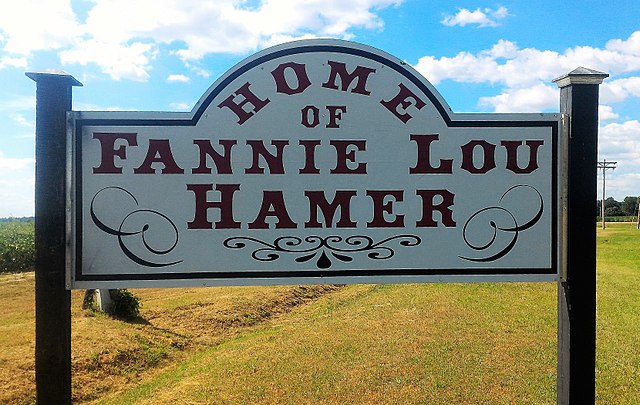
The book, “Mama Fannie,” evolved into a musical instrument as her daughter simultaneously read from the text and addressed the live audience. Jacqueline Hamer Flakes was a guest at the City of Asylum community center in Pittsburgh on January 14. Her presentation was a reading where she shared her new book about her mom, Fannie Lou Hamer. Her reading from the biography was one of the most unforgettable and affectionate I’ve witnessed because Jacqueline Hamer, also known as Cookie, rendered the book a musical instrument – she read a series of short sections, and following each, inspired by memories of her mom, she related her own stories that each narrative in the book motivated her to tell. The result was a splendid and engaging series of riffs on who Fannie Lou Hamer was and how she championed social justice throughout her lifetime. Here is some of what Jacqueline, the daughter, shared:

The chords: Fannie Lou Hamer

The riffs: Born in Montgomery County, Mississippi, Fannie Lou Hamer was a Civil Rights activist and community organizer who resisted white supremacy by working with both the SNCC (Student Nonviolent Coordinating Committee) and the SCLC (Southern Christian Leadership Conference). During her early forties, she visited a doctor to have a cyst removed, and unbeknownst to her, she was given a complete hysterectomy. Unable to bear children, she eventually adopted four girls, and Jacqueline Hamer Flakes, the author of the biography, was one of them.

The chords: Not just 40 acres

The riffs: Black Folk in the U.S. (and globally) have yet to receive reparations for enslavement, but where there is a will, there is a way. Fannie Lou encountered barriers simply trying to buy a home, and when she did finally acquire one, it was firebombed. Along with Maya Angelou and others, she went on to raise money in 1969 to purchase 40 acres in the Mississippi Delta. That land was central to the founding of Fannie’s Freedom Farm Cooperative which she expanded by an additional 640 acres in 1970.

The chords: Africa

The riffs: Fannie Lou was part of a SNCC delegation sent to Conakry, Guinea by Harry Belafonte. The trip in 1964 proved both life changing and inspirational. A child of the segregated US South, her travels in West Africa opened a window to a view of Black people capable of running their own societies.

The chords: Advice

The riffs: “What would Fannie Lou Hamer tell us today?” Jacqueline Hamer responded by saying her mom, the activist and organizer, would tell Black people to get an education. (Fannie had to labor in the cotton fields starting at age six, consequently she only attended school three months out of the year.) She would advise us to go into communities and help others get an education and to pay it forward and pay it back.

The chords: A pot of peas

The riffs: Jacqueline Hamer criticized how authors have written about her mother and built their own books and reputations without really knowing the real Fannie. She said was wonderful that, in the past, writers interviewed Fannie Lou before they wrote about her. But she reminded us that those who didn’t sit with her mom and shell peas, didn’t really know the real Fannie Lou Hamer.

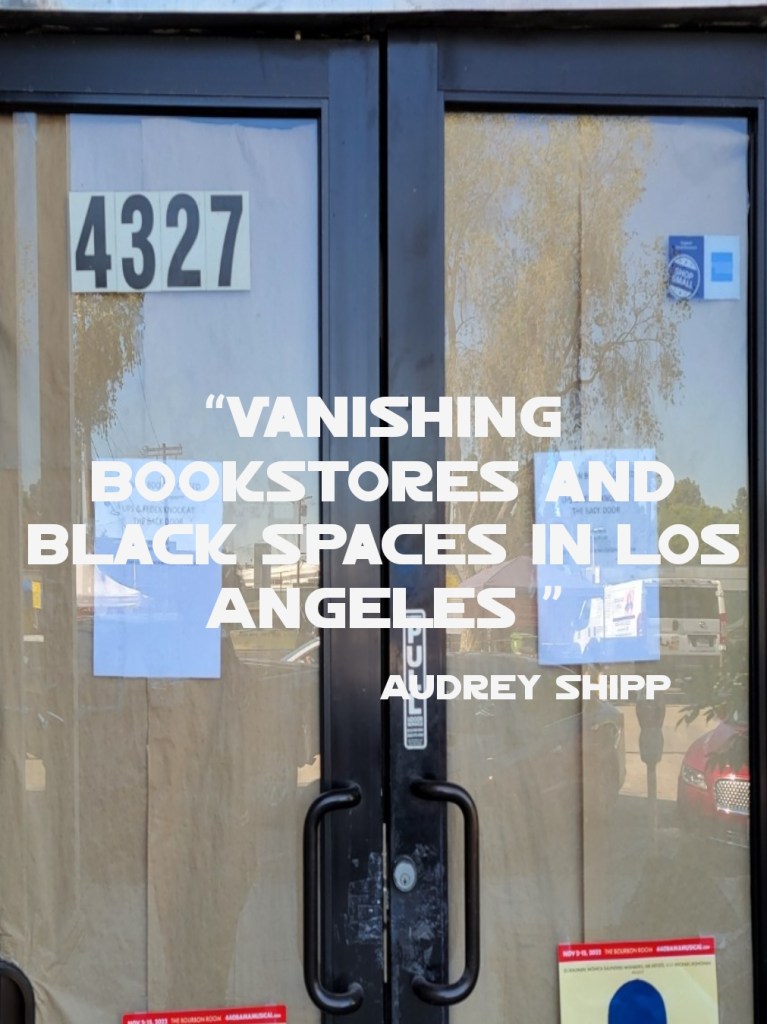
Vanishing Bookstores and Black Spaces in Los Angeles

I imagined myself buying several books at Eso Won Bookstore in Leimert Park during their final sale. Rumor was the Black-owned bookstore would be closing after thirty-six years in business. A landmark for Black Los Angeles, it was awarded 2021 Bookstore of the Year by Publishers Weekly. Despite its compact size of 1800 square feet, it had also been recognized as one of the largest Black-owned bookstores in the U.S. It was where I’d spied, surrounded by other books, the cover of the 869-page, Library of America edition of James Baldwin’s Baldwin Collected Essays and knew then that I had to buy it. My Baldwin purchase completed a couple of years ago, now the store’s founders, James Fulgate and Tom Hamilton, had reached retirement age. They started Eso Won initially inside a home and later as a book-on-wheels concept in the late 1980’s. Eventually the store would find a home at various storefronts in South Los Angeles before the owners settled on Leimert Park in 2006. I’d heard they would be closing sometime at the end of the year. So, I went to the bookstore at the beginning of November 2022 planning to make final discount purchases and say my last goodbyes.

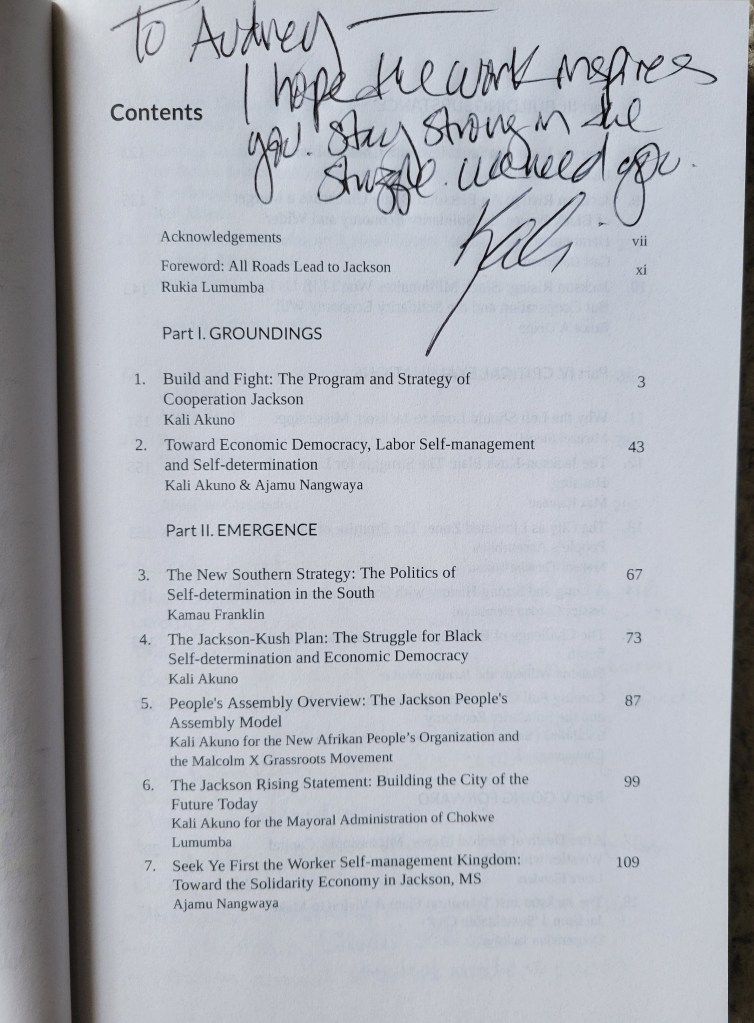
In the years following the 2014 police killings of Michael Brown and Eric Garner, Eso Won, along with the California African American Museum, was the location to hear Black writers and activists engaged with political and social life talk books and politics. It was at Eso Won that I heard Kali Akuno, co-founder of Cooperation Jackson, a Mississippi cooperative, speak about his book, Jackson Rising. That was an evening in 2017 when I headed to the bookstore after work. As they normally did on evenings of book talks, Fulgate and Hamilton converted the small walking space inside the bookstore into an auditorium by bringing folding chairs from the backroom and arranging them on the salesfloor. Using a small desk as his podium, Akuno faced the audience as we sat on the metal chairs anxious to hear his reasons for leaving California and starting a cooperative in the South.

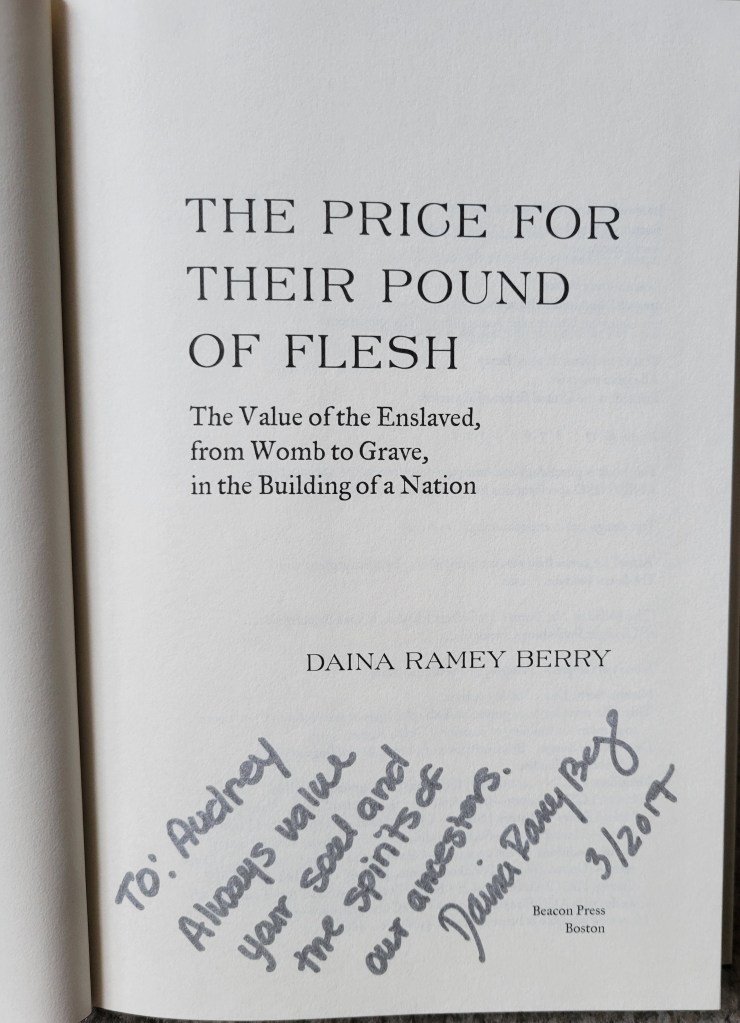
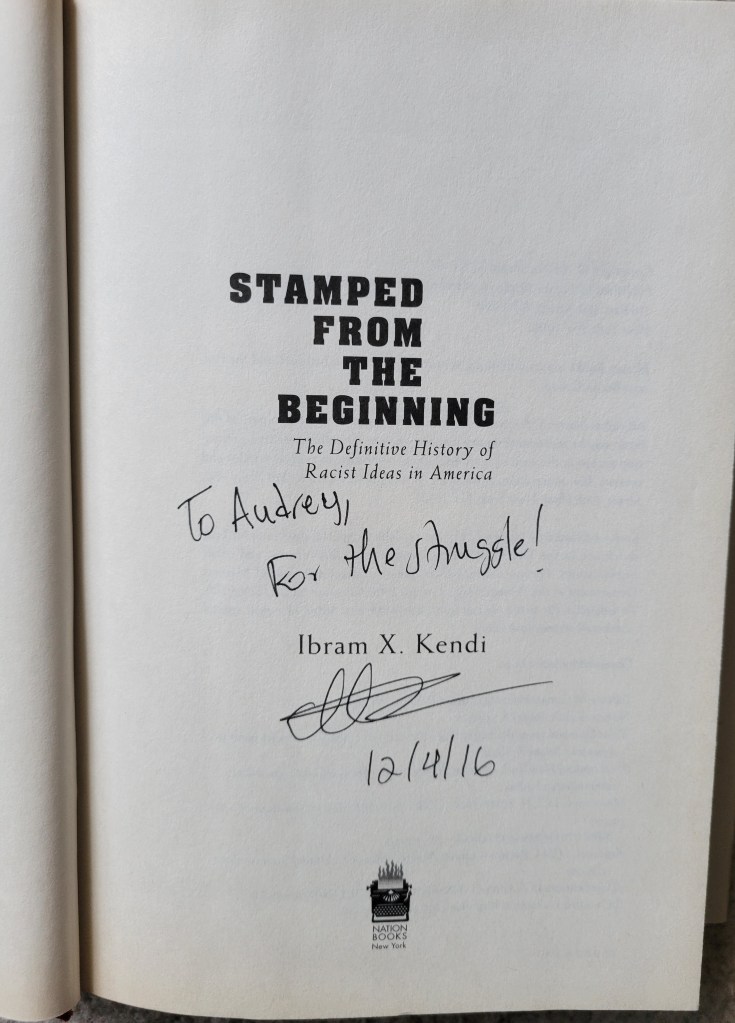
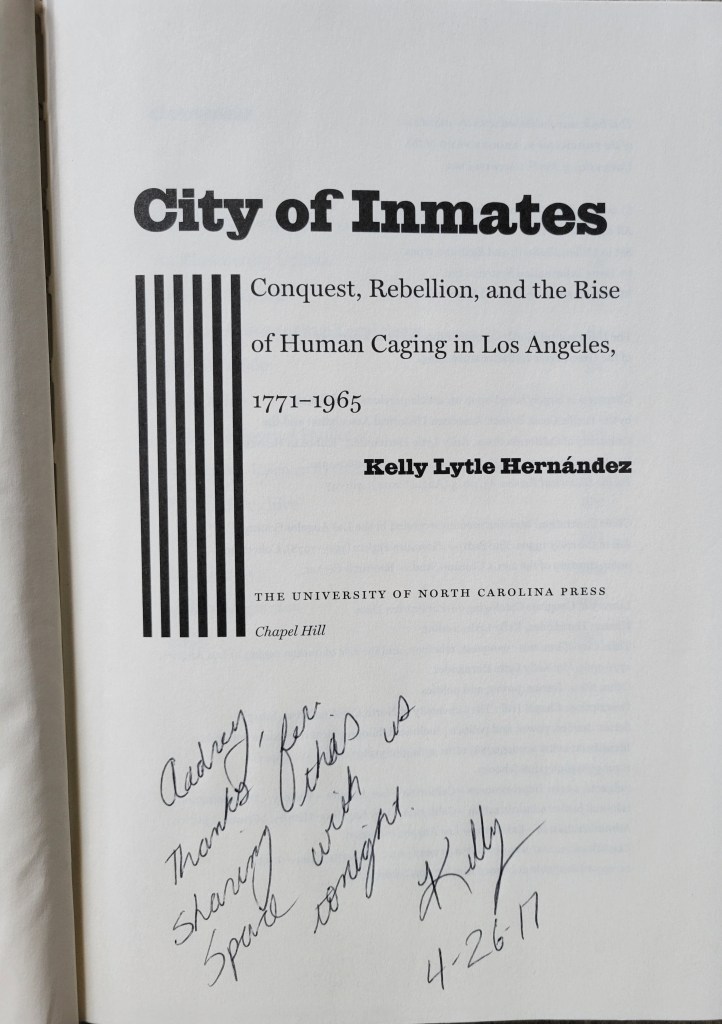
On other occasions, we might be ten people in the audience, and sometimes we were twenty with standing room only. The common thread connecting us was curiosity and a craving for answers from Black people who had analyzed our common oppression. Amongst the speakers and the audience, some were comfortable with reform while others sought revolt. Sitting in the small space on Eso Won’s sales floor, I also heard Ibrahim X. Kendi speak on How to Be an Anti-Racist, Kelly Lytle Hernandez on City of Inmates, and Daina Ramey Berry on The Price for their Pound of Flesh. As the nation confronted its violent legacy of racism and witnessed protests against police brutality, the Eso Won website and calendar became a lifeline connecting me to the next scheduled appearance of a writer, activist, or scholar.

Because I had heard the store would be closing at the end of 2022, I arrived at the beginning of November. Turning on to Degnan Avenue, I noticed a store with brown paper covering its windows. There was no sign above the storefront. My first thought: Is that where it was? I stopped my car momentarily. The commercial space that had sheltered the grandest dreams and creations of so many Black writers seemed now so tiny. I drove towards the park at the end of the block, turned around and drove back to the storefront. Yes, that is where Eso Won was. And it was now gone. I was too late. Silently, I cursed myself, and I cursed the city.

After parking, I got out and walked towards the former bookstore. Although I couldn’t enter, I figured I could at least allow my body the fiction that I was going to. A letter-sized paper taped on the closed glass door assured me that, yes, the store, with brown paper covering the windows was the former Eso Won. Beyond the storefront, I was drawn in by the Saturday morning environment of Leimert Park. It was a cross between movie set and maroon village. With cars parked at an angle on both sides, the middle of the street, which functions as a plaza, served as a marketplace for merchants selling t-shirts, jackets, and African clothing made of bold and colorful Ankara prints. On the northern end of the block, a man opened his black iron cast barbecue pit. He waved his arms at the billows of smoke causing apparitions of Tubman and Garvey to rise. At least two different sets of speakers on opposite sides of the street blared different reggae songs. Near the vacant Eso Won building, a Black homeless man huddled near a closed door while a young woman with a large Afro sat near the curb in a high metal chair and typed on her laptop that she’d placed on the metal table. Two Black men in expensive sports attire brisked past. Continuing down the block, I noticed at least two other stores had closed. I believe one had been a store that sold clothes and wooden sculptures from Africa. In front of an empty storefront, three or four musicians had started a session of African drumming. The drummers pounded resonant and rhythmic beats into the animal skin as a small group of mostly men stood by chatting and listening. At the southern corner of the block, men hurried in and out of a barbershop.

While it’s not the only Black bookstore in Los Angeles, the closing of Eso Won is a double loss. It is symbolic of the decline in the Black population of Los Angeles that has fallen from a high of thirteen percent in the 1990’s to its current eight percent. For various reasons, many Black LA residents are moving to the nearby suburbs or as far as the neighboring counties of San Bernadino and Riverside, while others have moved out of state. The outward migration means Black spaces like Eso Won disappear.

Eso Won is also symbolic of the disappearance of independent bookstores in the Los Angeles area. During my high school years, my teacher sent ten or twelve of us students who were in her AP Spanish Lit class to the long gone Librairie de France/Librería Hispánica on Olive Street, near Seventh, in Downtown Los Angeles. There used to be separate Spanish and French bookstores on Book Sellers’ Row on Westwood Boulevard.  Book Sellers’ Row started at Pico and ran all the way up to UCLA. Other bookstores on Westwood included a medical bookstore, Sisterhood feminist bookstore, and the pride of the region, Westwood Bookstore itself. Near West Hollywood there was the Bodhi Tree which specialized in religion, philosophy, and spirituality. And in Santa Monica, on the now gentrified Third Street Promenade, the leftist bookstore, Midnight Special held court for twenty-three years and hosted writers, thinkers, and activists such as Maya Angelou, bell hooks, Elaine Brown, and Edward Said. I didn’t have the fortune of seeing those luminaries in Santa Monica, but I was in the audience to hear the reading by Chicano poet, Jimmy Santiago Baca. After his reading, he signed my copy of Martín & Meditations on the South Valley.

While the moneyed classes might argue that the growth of a conglomerate like Amazon — which has precipitated the closure of independent bookstores — has led to lower prices and the convenience of warehouse-to-door shipping, for the Black population, the loss of a space like Eso Won offers no rainbow on the horizon. As members of a community that has languished for centuries without reparations, the owners of small Black businesses almost never have the economic foundation and investment to grow into large capitalist enterprises. And while the forces of capitalism allow privileged classes of White residents to build stronger and newer communities, those same forces tend to split up established Black neighborhoods. I’ve seen evidence of this along Crenshaw Boulevard, just two blocks away from Leimert Park, where numerous Black businesses have closed due to the economic hardships caused by gentrification as well as the pandemic and subway construction.

So, on a November day in Lemeirt Park, the notification taped on the closed glass door was proof Eso Won was gone. Like Central Avenue, Santa Barbara Avenue, Rodeo Road, the old Eastside. Now a memory amidst the rolling rhythms of music, the greetings of smiling street merchants, and cars driving away into the distance.

Haiti and the US-Mexico Border

(Published by Pure Slush, Vol 21: “25 Miles From Here,” September 2021)

I wanted to leave Los Angeles and go to the US-Mexico border.  Not 25 miles away, more like 120.  I’d read about the Haitian migrants who’d made their way to the border after walking from Brazil.  Walking through South America, Central America, and Mexico to reach the border with the United States.  There must be something I could do, I figured.  I felt hopeless.

How did the Haitians end up in Brazil?  They migrated in 2010 following the Haitian earthquake when Brazil offered work contracts on projects related to World Cup 2014 and the 2016 Olympics.  After both the huge construction projects and the economic boom related to them ended, work opportunities disappeared. An estimated 40,000 Haitians began their trek to a US-Mexico border which then President Trump was intent on sealing.

My connection to the US-Mexico border has been continuous.  I crossed it as a youth when my mom drove from Los Angeles to Ensenada, Mexico for daytrips that included sightseeing along the expanse of the Pacific Ocean and reaching a final destination at a Mexican restaurant that had chicken tacos and sweet soda.  During my youth, a US citizen driving across the border simply showed their California Driver’s License to enter Mexico and again, to return to the United States.  It wasn’t the current situation of having to show a passport to cross over.

For me, the US-Mexico border always seemed accessible.  Prior to the suburbs between Los Angeles and San Diego becoming developed cities of their own with their own traffic jams, San Diego, on the US side, was a quick two hours away by car.  My mom would exit the urban sprawl of Los Angeles taking the San Diego Freeway which offered five or six lanes for the cars headed south.  The apartment complexes and strip malls and car dealerships of L.A. would give way to homes on green hills and orange groves.  Nearing San Diego, I saw glimpses of the Pacific Ocean with the sun beating down on rolling waves, seagulls in the sky.

And upon arrival at the border, it was my mother showing her California Driver’s License to the Mexican authorities waiting at the gate that had ten or fifteen entryways for cars entering Mexico.  It was the change from smooth US pavement to the bumpier Mexican side.  The chaos of cars driving in downtown Tijuana where no one seemed to keep their car within the car lanes, or where painted car lanes were not even visible.

As a teenager, I made a conscious decision to cross the border at 17 when I flew to Durango, Mexico to study Spanish in summer school and to live, during my stay, with a Mexican family.  The family took in three females for that summer stay.  I was the only African American, and there were two blondes — from San Diego, and Canada, respectively.

The following year, at 18, I crossed the border again, this time flying to Mexico City all alone to take in the sights, visit museums, and buy as many books as I could fit into my suitcase.  The selections included books by Chilean poet, Pablo Neruda, Mexican poet, Octavio Paz, and Nicaraguan poet, Ernesto Cardenal.

And even after the teen trips by plane in which I crossed the border, there was adult, schoolteacher me driving from L.A. to TJ to buy comic books in Spanish that I could use for my silent reading program.  It was that odd year in which my middle school administration decided I, a bilingual English teacher, should teach a class in Spanish to newly-arrived, immigrant children from Mexico and Central America.  And there was childless me crossing the border with my then husband to buy clomiphene at a Tijuana pharmacy to help us conceive a child.  The Mexican pharmacies offered a much cheaper price than anything that could be found in the States.

But there was no me I could configure in 2016 to cross the border to assist the Haitians.  None of the roles I had taken on were up to the task – the child on day trips, the foreign student, the literature and art enthusiast, the middle school teacher, the childless mom.  None of those roles would adequately buffer social activist me.  My passport was expired.  I was now a single mom, and I felt I needed to be accompanied by a man because, despite modernization, patriarchy is a thing in Mexico.  It’s the country with the second-highest rate of feminicide in Latin America after Brazil.  There was getting my car across.  Would I buy the additional car insurance in San Diego as US citizens do prior to driving their car into Mexico?  Or would I rent a car on the U.S. side with the intent of driving that insured vehicle into Mexico as some are known to do as well?

I felt the helplessness both the US and Mexican governments had imposed on their citizens and non-citizens.  I felt solidarity with the 40,000 Haitians who had walked from Brazil to Mexico in 2016.  Their bravery and determination are unparalleled.  Haitians have borne the emblem of Black resistance to empire for centuries — since their long fight against enslavement and for independence from France, 1791-1804, and during their long and ceaseless resistance against US-backed, feckless political regimes imposed on their own country.

While many Haitians have decided to try to live in Mexico as undocumented persons in that country, it is estimated that in Spring 2021 there are still 4000 Haitians at the US-Mexico border in Tijuana.  They languish amongst the growing surge of immigrants from Central America who are fleeing a host of ills, including gang warfare, climate change, and post-covid economic devastation.  The Haitians have cited incidences of racism from Mexican police and from other immigrants as well.

I continue to advocate for justice in as many ways as I possibly can on this side of the border – my existence inextricably bound with that of oppressed people everywhere.

Foreign Whips and Detroit’s Decline

In the early 1940’s, Detroit was at its industrial zenith, leading the nation in an economic escape from the Great Depression.  Between 1940 and 1947 manufacturing employment in Detroit increased by 40 percent, a rate surpassed only by Los Angeles, San Francisco, and Chicago.” [i]  

Inherent in Detroit’s zenith were forewarnings of its decline.  Positioned as one of several U.S. magnets, Detroit drew in hundreds of thousands of desperate workers from disparate regions of the country.  It was a terminus for black migrants fleeing the Jim Crow South, as well as European immigrants new to America.  The catalyst: the American Dream.  People were in march with the expectation the country would fulfill the promise engrained in its founding documents.  No doubt, it would come about.  Yet, challenges to Detroit’s zenith were already in ascension.  And two of its competing cities—Los Angeles and San Francisco—were located in the state which would become the nation’s most populous, attracting millions of migrants and immigrants in its own right.

“In the U.S., there are at least two dominant musical manifestations of hip-hop culture: one (tributary-like) characterized by staying independent, sticking to old-school hip-hop ideals, ‘keeping it real’, the other (river-like) characterized by ‘ghetto fabulous’ aesthetics and a bling-bling attitude.”[ii]

Gucci Mane opens the 2016 BET Hip Hop Awards in fur coat and jeans.  Shirtless, multiple diamond chains serve as his mantle.  Recently released from jail, he is ready to perform capitalism.  “In bling-bling (culture) one can find a way to perform capitalism…(a) trope of reappropriation.”[iii]   His rap lyrics swerve around the themes of drug sales and his own vulnerability as an object of violent pursuit on the streets.  Gucci removes his coat as rapper Travis Scott joins him on stage.  Now Gucci is in boxing mode.  He moves his arms and head as if in a boxing ring, battling.  Contrasting with Gucci’s opulence, Travis shields himself in padded bomber jacket and jeans, as he raps about sexual prowess and drug use.  Himself creative director of this performance, Scott alternates between pointing at the audience and curling his free hand towards his waist, usually not quite touching it.  As the song segues into the lyrics of “Pick Up the Phone,” Gucci exits the stage and Young Thug, aka TG, aka Thugger, aka Jefferey, surges forth from a phone booth on stage holding his microphone in one hand and using the other to seemingly push back the encroachment of his own idiolect.  Thugger’s lyrics then race ahead of him so much so that he appears to be pursuing them on stage as he rhythmically paces forward while alternately retreating, still, of course, clutching his mic. He’s amped.  Finally, using humming as a signal of intrusion, Quavo, possessor of one of the most discernible voices in contemporary male rap, enters through an aisle amongst the audience, accompanied by a convoy of females.  Minutes after his joining the artists on stage, the three men close the song.

“Ford, Chrysler, and General Motors had their headquarters in the Detroit area.”[iv]

The Big Three corporations, after enlisting American workers, engaged to satisfy the desire of the American populous.  As a society, we crave more.  We yearn to be more mobile.  We covet the newest model.  Yet linked with the growth of the automobile industry was the war economy of 1939-1945.  World War II commanded that auto plants convert to the production of military planes, tanks, and vehicles.  As huge numbers of soldiers went off to war, there were more jobs for additional workers, black migrants, even women.  The corporations profited from the war, as did we.  The war economy was lucrative for the country.  Yet it doesn’t end here.  Corporations aren’t easily satiated and will seek more profit.  Advances for CEO’s, increases for executives, dividends for shareholders.  As such, big business will be antithetical to unions that try to organize workers for a dignified wage and working conditions befitting the workers’ true worth.  As agents of capitalism, corporations will utilize the tools of racism, sexism, and xenophobia to atomize workers who are both means and menace.  Dialectics.  Inherent in the growth, is the portent of the decline.

“For large numbers of African-Americans, the promise of steady, secure, and relatively well-paid employment in the North proved illusory.”[v]

Escaping from the Jim Crow South, the expectation is for an improved life liberated from the social limitations of segregation and the historical legacy of slavery.  Yet black migration is often a catalyst for white flight.  White flight to the suburbs.  White flight into whiteness as European ethnics hasten to discard their ethnic markers and join the “white race” of the United States.  White flight in Detroit’s employment agencies that were classified in the yellow pages as “Colored” and “White.”[vi]   White flight in the advertisements for employment that until 1955 “regularly specified racial preferences in job listings.” [vii]  White flight into the better auto factory jobs leaving blacks male employees in the most subordinate and the most hazardous positions which would eventually shorten a worker’s life, such as that of paint room operator. [viii]  White flight as some of the penny-pinching auto plants abandon Detroit and relocate to the off-limits, Jim-Crow South seeking cheaper labor. [ix]  White flight in some unions purporting to represent all members of the working class, but at times complying with management’s deployment of the tool of discrimination. [x]  White flight into separate neighborhoods that have “rates of segregation barely changed between the 1940’s and the present.”[xi]  White flight that would result in 1980’s Detroit having “eighty-six municipalities, forty-five townships, and eighty-nine school districts.” [xii]

“I KNOW ALL MY WHIPS ARE FOREIGN…” (Young Thug, “Pull Up on a Kid,” rec. 2015)

Little wonder the lack of brand loyalty.  For some, the desire for a whip, or car, shifts from the American ideal to the foreign.  The Big Three did not envisage our growing inclination, as consumers, for less grandiose and more efficient cars. That preference would be fulfilled by economical Japanese imports.  And for the upper class, the European import became a public badge of one’s ranking.

“I KNOW ALL YOUR BITCHES BORIN’” (Young Thug, “Pull Up on a Kid”)

The use of the profane term “bitch” can undoubtedly cause wincing in a room.  Sweaty hands will clutch.  In academia.  At the corporate news headquarters often owned by the same companies that sell rap music with profane lyrics.  Parents who span a wide cultural array and are members of varied social classes.  Parents who are determined to do the best for their kids, shudder.  The profane word “bitch” and how it divulges the speaker’s perception of women and affects the female’s perception of herself within the speaker’s gaze.

In my workaday environment, the public secondary school, being the recipient of this profanity is not unfamiliar territory.  A few elementary teachers may have also been branded with the term.  It isn’t the student with which one has a good rapport but who suddenly has a bad day that decides to call the teacher “bitch.”  If the teacher is fair, professional, and consistently delivering instruction, the profane epithet will most likely be delivered by a student who did not like the teacher from day one.  The friction and defiance were already present and remained a constant.  Perhaps because the student, given his or her own background, had trouble with authority.  And in a moment of being disciplined, the teen will mutter or exclaim outright, “bitch.”  The goal being to chip away at the teacher’s power, relegate her to a lowly position as a woman, and heap on humiliation.  Contrastingly, in heated moments of confrontation, are my male colleagues down the hall branded “bastard”?  Seared with an f-bomb?  Probably neither.  “Bitch-ass” is more than sufficient since it achieves the aforementioned humiliation while also emasculating the male working in a predominately-female field.

“A masculinist discursive strand is clearly identifiable in both rap music and its parent culture, Hip Hop…Both women and men have participated in Hip Hop culture and rap music in ways that have been both oppressive and liberatory for women.”[xiii]

In his song, “Pull Up on a Kid,” Young Thug raps about a particular type of “bitch.”  “Ooh she bad, damn she bad, yeah, she bad, yeah.” A bad bitch who is able to fulfill the sexual appetite of the man who, in this song, will probably not be faithful given his desire to “wet” not just one female, but also “yours.”  Although almost virginal and/or impeccably dressed (“Fresh as a peppermint”), she is not adverse to a sexual threesome.  This woman knows how to hang with a man with major money.  She is travelled, having formerly lived in Miami.  She is able to easily cross class and cultural lines having hung out with Haitian zoes, or street gangs.

“Hip hop, including rap music, is a complex and contradictory arena in which regressive and oppressive elements sometimes complicate and at times even undermine what fundamentally remains an oppositional and potentially liberatory project.” [xiv]

Potentially.  Yet late capitalism is sloppy.  Sloppy indeed.

And African-Americans are a complex people.

“Such a double life, with double thoughts, double duties, and double social classes, must give rise to double words and double ideals, and tempt the mind to pretence or to revolt, to hypocrisy or to radicalism.”[xv]

Black women gained the least…”[xvi]

The Black women of Detroit’s manufacturing zenith had no crystal stair.  A meagre 20% of them were able to acquire factory jobs in the auto plants by 1950 [xvii]  where all females had to labor to climb a seniority list separate from that of males.  Many worked for white families as domestics – an occupation they would soon weary of.  It was their own bodies’ ability at reproduction that would open up more avenues for work in the black schools of Detroit where black female teachers would serve as a rung for the rest of the family to climb the ladder towards the coveted middle class.  As the barriers of discrimination came down, more job opportunities would open up for black females in city work. [xviii]

“BALMAIN JEANS, EXTENDED TEE, THAT MY SWAG, YEAH” (Young Thug, “Pull Up on a Kid”)

The love of the foreign, whether it be the car, the woman, or French, Balmain jeans.  What should we expect in a global economy?  Germany and Japan now rival the U.S. in auto manufacturing.  When we casually shop at the local store, we not only select from American-made goods.  We are consumers in a global market in which “American” companies have moved across the border and overseas for bargain-priced labor.  The corporations pay a pittance to workers as the profits of execs and shareholders balloon.  At the expense of American workers hoping for secure lives for their children.  To the detriment of middle class America budgeting like the working class.  To the deprivation of impoverished blacks, people of color, immigrants who have not yet disappeared into the vast anonymity of whiteness and its social advantages.  Glance at the tags, the label, the VIN number.  More than likely, made somewhere other than America.  Swag is foreign.

“Rap lyrics may or may not contain an overt critique of capitalism, but they are generally supported by a communal value system where linkages between people are held together by loyalty and blood.” [xix]

So much so that Young Thug warns, “Playing with my slimes, you won’t make it out the exit.”  In Thugger’s idioglossia his slimes are his confidants, his homies.

“In expressing the collective dream of becoming something else – of taking flight – the statement becomes inseparable from the collectivity and the community.” [xx]

Capitalism will link us together just as potently as it rips us apart.  If we survive the inherent violence of the plunder, we may be forcibly marched off land that our ancestors down the ages and through folklore vowed was ours.  We may be overpowered, shipped off to new lands, and auctioned off as chattel.  We ourselves may relinquish family ties in a particular region to migrate into a distance where there is the promise of work, higher pay, improved living conditions, a new life.  We leave our country and cross borders in search of a material dream.  We abandon the familiar, the bloodlines of generations.  We relinquish the customary and are forced to become accustomed to new regions.  We learn new countries, cities, languages, rules on the job.  In an effort to combat the ravages of capitalism and to resist its ripping us apart, we form alliances in social movements, unions, politics.  Inherent in the new fusion is capitalism’s desire to tear us apart.  By social class, by gender, by race.  The psychological, social, and cultural tolls on us can be terrifying, and for some, insurmountable.

“In the case of Hip Hop, ‘the street’ is a site where the sensibilities of black lower class people prevail.” [xxi]

Class stratification within the black community is a reality.  In the geographic regions of the urban North, Midwest, and West where blacks migrated in search of nebulous dreams, not all, in many cases few, made it up the rungs to a coveted, continuous middle class life that promised to be easier with employment steadier.  The deterrents to black progress were not only economic because racial barriers had also been set up.  Blacks carried the double burden of having started far behind whites in the country and whites new to the country who capitalized on their whiteness.  As the U.S. deindustrialized, automated, and outsourced “a seemingly, permanent class of underemployed and jobless blacks had emerged” [xxii] who were often told they were to blame for their society’s shortcomings. [xxiii]

“The process of deindustrialization – the closing, downsizing, and relocation of plants and sometimes whole industries – accelerated throughout the twentieth century.”[xxiv]

“Employers left industrial centers with high labor costs for regions where they could exploit cheap, nonunion labor.”[xxv]

“ALL MY WHIPS ARE FOREIGN…” (Young Thug, “Pull Up on a Kid”)

The dialectics of rap music: “the marginalized celebrating that which marginalizes.”[xxvi]

As some of Detroit’s automakers relocated to the South in search of cut-rate labor, others eventually spread production to myriad regions of the globe where workers would manufacture parts of the automobile and then ship those parts back to the U.S. for assembly and the sticker “Made in America.”  The automation of U.S. plants meant many workers lost their jobs and were being displaced further and further away from the American Dream of an irrevocably secure life.  For frugal middle and working class U.S. consumers, the Japanese car became an economical alternative to the large gas-guzzling American models.  For the wealthy elite, German engineering supplied luxurious, high-end autos.

How do members of the black working class survive?  Education.  Hard work.  Follow the rules.  Some will defeat the barriers of sky-rocketing tuition, racism, family conflict, and personal predicaments and make it into the coveted middle class.  Those who don’t will find that minimum wage, low-skilled service jobs are no entry into a gratifying and secure livelihood.  A fraction may be tempted to “pull up on the mail truck” (“Pull Up on a Kid”) and possibly risk the consequences of a federal heist, not unlike the federal heist of multinational corporations currently not paying U.S. taxes.  Or, for those with lyrical skills, there is the music industry, specifically hip hop and rap, where one can engage in the dialectics of being able to “perform capitalism,” voice its dreams, shortcomings, and how it functions, all the while “retaining specific cultural markers.”[xxvii]   In other words, performing capitalism while staying black.

[i] Thomas Sugrue, The Origins of the Urban Crisis: Race and Inequality in Postwar Detroit, (New Jersey: Princeton University Press, 2005), 19

[ii] Alf Rehn & David Skold, “All About the Benjamins—Hardcore Rap, Conscious Consumption and the Place of Bragging in Economic Language,” “Culture and Organization, April 2005, http: http://www.researchgate.net/publication/228623915

[iii] Rehn & Skold, “All About the Benjamins”

[iv] Sugrue, The Origins of the Urban Crisis, 16

[v] Sugrue, The Origins of the Urban Crisis, 8

[vi] Sugrue, The Origins of the Urban Crisis, 95

[vii] Sugrue, The Origins of the Urban Crisis, 94

[viii] Sugrue, The Origins of the Urban Crisis, 99

[ix] Sugrue, The Origins of the Urban Crisis, 262

[x] Sugrue, The Origins of the Urban Crisis, 11

[xi] Sugrue, The Origins of the Urban Crisis, 8

[xii] Sugrue, The Origins of the Urban Crisis, 266

[xiii] Layli Phillips, Kerri Reddick-Morgan, and Dionne Patricia Stephens, “Oppositional Consciousness Within an Oppositional Realm: The Case of Feminism and Womanism in Rap and Hip Hop, 1976-2004,” The Journal of African American History, Vol. 90, No. 3, The History of Hip Hop (Summer, 2005, pp. 253-277, http://www.jstor.org/stable/20064000

[xiv] Layli Phillips, Kerri Reddick-Morgan, and Dionne Patricia Stephen, “Oppositional Consciousness Within an Oppositional Realm,” 254

[xv] W.E.B. Du Bois, The Souls of Black Folk, (New York: Vintage Books, 1990), 146

[xvi] Sugrue, The Origins of the Urban Crisis, 28

[xvii] Sugrue, The Origins of the Urban Crisis, 28

[xviii] Sugrue, The Origins of the Urban Crisis, 111

[xix] Layli Phillips, Kerri Reddick-Morgan, and Dionne Patricia Stephen, “Oppositional Consciousness Within an Oppositional Realm, 260

[xx] Rehn & Skold, “All About the Benjamins”

[xxi] Layli Phillips, Kerri Reddick-Morgan, and Dionne Patricia Stephen, “Oppositional Consciousness Within and Oppositional Realm, 259

[xxii] Sugrue, “The Origins of the Urban Crisis, 144

[xxiii] Sugrue, “The Origins of the Urban Crisis, 156

[xxiv] Sugrue, “The Origins of the Urban Crisis, 127

[xxv] Sugrue, “The Origins of the Urban Crisis,” 138

[xxvi] Rehn & Skold, “All About the Benjamins”

[xxvii] Rehn & Skold, “All About the Benjamins”
Cool Black Friend

“Nothin’ from nothin’ leaves nothin’

You gotta have somethin’ if you wanna be with me”

(“Nothing from Nothing,” Billy Preston)

“You ain’t got to be rich to talk to Gucci, but you got to be part of something

 Ain’t nobody play no pro ball or nothing? Ain’t nobody got nothing?”

(“At Least a M,” Gucci Mane, Mike Will Made It, Zaytoven)

At nine-percent of the city’s population and falling, living in multifarious communities throughout the City and County, Black people in L.A. have numerous opportunities to be the “Cool Black Friend.”  Opportunities abound on city streets, on school and college campuses, in the workplace, on Hollywood screens, in the music industry, and at the club.  Possibilities are plentiful amongst a myriad of ethnic groups but especially amongst the power majority – White/Euro-Americans, whom as Michael Eric Dyson correctly notes, Blacks have been “reading” for centuries for our own survival–and amongst Latino communities of Mexican and Central American heritage who are the majority culture in once overwhelmingly-African-American South L.A.  Having created the philosophy of cool on U.S. terrain, and having created that framework despite the nothingness of their former condition as chattel property, there is little wonder that Blacks are selected as the Cool Black Friend.  An anomaly, perhaps, given that the deculturalization process for the enslaved involved the “uprooting from land” and targeted the elimination of language, cultural practices, and family ties.  Yet Black history in America is a history of resistance and the creating of something out of nothing.  Railroads invisible to the eye.  Churches in a land that denied them literacy and the bible.  Schools and universities before their freedom was even granted.  Resistance to empire — an acumen for the precise where and when in political movements — that white Liberals cling to today.

In the nation at large, and following the era in which African Americans were forced to take up European musical instruments and play for their enslavers, the Cool Black Friend has existed in music since the era when Whites visited segregated Black clubs in locations such as Harlem or Chicago’s South Side.  For the visitor, these excursions were undoubtedly a positive if one had a Black connection who could facilitate entrance to a musical venue.  And today, if a non-Black musician or singer performs a type of music with African rhythm or African-American intonations, it is advantageous to be chums with a Black performer who can give you credence.

Sports abound with Cool Black Friends.  We see this especially on university campuses with huge endowments and top tier sports programs where the student body may be comprised of few African Americans, but the sports team has a large number of Cool Black Friends leading the university to NCAA victory and its resultant monetary gains for coaches, administrators, and the like while excluding the players themselves.  High five to the Cool Black Friend when he or she scores.  Professional athletics are more of a mixed bag, depending on the sport.  Cool Black Friends generate billions of dollars in stadium expansions, advertising, broadcasting, and ticket sales, especially during finals when corporations and the wealthy might buy out front row seats at market price for five thousand dollars (or resale $50K) to watch Black athletes take the spectators’ team to a win.  High five on that.  Yet some sports, such as football with its 70% black players, 25% black quarterbacks, or tennis which has consistently and sporadically (to use an oxymoron) had a lump in its throat regarding the assertive, pro-Black, female athleticism of Venus and Serena Williams, or golf which tried to play the token card with Tiger Woods but had to do so only half-heartedly given that athlete’s ambivalence about his own political power, show no interest in white liberal chumminess.

In some cases, having sex with a Cool Black Friend can result in the creation of the longest-running reality show to date in the U.S.  And even though the relationship that spurred that sex tape may sputter and fizzle, the Cool Black Friendship may be seen as a winning formula if the celebrity and her insecure entourage have no marketable talents of their own.  Thus, the formula must be repeated and replicated because, of course, Black Americans have a history of creating something out of nothing.  Aren’t these the people who following Nixon’s questioning their ability to survive another 500 years in the U.S., who after that same President’s statement in the 1970’s that they would only survive if the best ones were inbred, and amidst allegations in the 1980’s of CIA support for Central American counter-revolutionaries that led to dumping cocaine into the hood to fund the Contras and further destroy the Black family while fueling the street-to-prison pipeline, turned the dregs of that historical experience into a musical genre?  Trap Music aside, some Black friends are simply an insinuation.  By getting butt implants or pumping up one’s lips, it’s possible to allude to a Cool Black Friend 24/7, even when he/she may not be in one’s presence.

In the United States, which has raced with Russia in building approximately 15,000 nuclear weapons, the detonation of 100 of which would block the earth’s sunlight.  The U.S. with the world’s largest number of incarcerated people, 40% of whom are Black, although Blacks are only 13% of the population.  The U.S. which is 5% of the world’s population, yet uses 24% of its energy and is ranked the second largest carbon dioxide producer. A country comfortable with the notion that white wealth is 13 times that of Blacks and Latinos. Yet, living in the Empire, and aware of the disproportionate distortions of day to day life, when Blacks shout, “Black Lives Matter,” “All Lives Matter” is, at times, the rejoinder of Euro-Americans.  With the latter, in this instance, showing scant knowledge of how call and response functions, the question to be pondered is where in the makeup of the Empire is the message “All Lives Matter” being communicated.  Whites live in the Nation.  Blacks, overwhelmingly, live in the Empire.  Even though news networks, public relations firms, and advertisers have recently put their own spin on the word “matter,” so that mileage, insurance, and happiness “matter,” the original proclamation endures.

In these circumstances and during his two terms in office, perhaps President Obama was the ultimate Cool Black Friend.  His presence allowed the United States to look progressive, as if it had overcome its racial differences, as if tolerance were the norm.  He brought Black cool to the nation and the imperial Oval Office. In a geographical world region founded on settler colonialism, Obama inherited the continental — North, Central, and South American — desire of political leaders to have it both ways – to pillage while appearing benign.  In the U.S., the liberal establishment clung to its belief in a palatable nation in which we could maintain our wasteful, consumerist lifestyle, hopefully come together as one, bridge the inherent conflict in maintaining a huge military budget, while supposedly being a beacon to the world of harmonious progress.  In his role as President, Obama had to set the course for both the nation and the empire, but like many imperial leaders, he overlooked the plight of some of his colonial subjects – amongst others, Blacks themselves, who, as inhabitants of the Empire, were seeking a liberator and have scant need for Cool Black Friends because we are our own Cool Black Friends.

The Charleston Nine, W.E.B. Du Bois, and the Art of Jacob Lawrence

One soul, hundreds, thousands may hear the whistle of the early-1900’s train in Jacob Lawrence Number #5.  These are W.E.B. Du Bois’ “black refugees” who decades prior were also escaping the injustices of the vestiges of Southern slavery.  Amongst these souls, the excitement may be there, the expectation, and idealization of life in the U.S. North, especially given that Northern industry, in many cases, is paying the fare, making it quite worth the while to pick up and leave the unequal, segregated living conditions of the South.  Will Northern industry’s promise to pay transportation lead to the same indentured servitude experienced by blacks in the Reconstruction South?  Will the North be the antidote for the circumstances in the South where “the black man has simply to choose between pauperism and crime” (Du Bois)?  The experience of my grandmother was that of leaving Tennessee in the 1930’s, barely 20, the youngest of eleven children all living except the one black male disappeared into the night to never return home again.  She was the only one to take the train north to Chicago.  Or perhaps there were others in her family who went north, but they didn’t stay.  They would eventually return south.  Not she.  Her mother and father had come from Mississippi to Tennessee and as family lore would have it, her mother had Indian blood.  This was more than likely a truth, but also a bit of a digression given our black folk propensity to reach into a nebulous past and pull out our Native American blood to explain why we are not quite so black African, where the yellow, honeyed brown, and, chestnut skin colors come from.  These skin tones being a phantasmal legacy of the white rape of black females by slave owners.  This acerbic inheritance was quite apparent in my maternal grandmother’s family line, even more so in my father’s whose family, unlike my grandmother’s, took a loathsome pride in their light skin color, so much so, that my own mother was not readily accepted into their clan.  All this, yet the most important factor being it was the African blackness which held everything together and made us who we were and who we are and which is the beginning and end of our universe until eternity always loyal linking me, us to Africa, the Caribbean, the Americas, and beyond. Thus, therefore, and so forth, into the North on Lawrence’s black train, belching black smoke as the headlamp leads the way.  Iron tracks shackle southern, agricultural land “once marvelously rich but already partially devitalized by (the) careless and exhaustive culture” (Du Bois) of the slave system. Iron wheels navigate plots deceitfully promised “for eventual lease and sale to ex-slaves in forty-acre parcels” (Du Bois).  Northern industrial lords, in their bidding, analogous to the contemporary “coyotes” of the U.S. Southwest and Mexico who round up desperate immigrants and move them north with the expectation that the human smuggler will eventually be paid for his effort.

Jacob Lawrence 42 exposes a South disgruntled with the undertaking and enterprise of migration.  A white man, gun and holster on his hips, stands as an “X” at the train station door ready to arrest the two departing black passengers.  Police officer?  Sherriff?  Perhaps.  Yet this is the land in which “every white man was ipso facto a member of (the) police” (Du Bois).  And blacks were a people whose first crime in this country, and particularly in the South, was their “blackness or other physical peculiarities” (Du Bois).  Surely, there must have been more than a few residents in white neighborhoods who murmured under their breath, “Let the niggers leave.”  Before their self-ordainment as African-American.  Ante-dating their self-proclamation as Afro-American.  Prior to salvos accompanied by raised fists of black power, these Colored people and Negroes (as branded by the Spanish and Portuguese) were leaving a land that for several centuries had deemed “life amid free Negroes (as) simply unthinkable, the maddest of experiments” (Du Bois).  Still there was this despotic effort to impede blacks’ departure, blocking their train passage because, of course, the South was losing former free labor, current cheap labor, the people who made both the white landowners and the white poor feel racially superior to all other beings on earth, the women who had cleaned their houses, raised their kids.  The men and women who while working in their hot, insect-infested fields, some dropping dead to the ground and then being kicked aside, because the plough never stopped (Du Bois), still had the audaciousness to light a white, desolate world with spiritual song.  The people who should have been crushed by centuries of abuse after losing their African spiritual world but who bowed their heads down and embraced a god on a cross whose word they had to fight to read, often in secret, and to whom they had to worship in the wooden churches that would be kept separate Black Churches because they could not enter the white.  Wooden churches that could light up in burning flames of hatred at the flick of a match and still do, historically black churches, because we are a historically black people carrying history historically on our backs, historically black in Charleston when praying to that same God and subject to being shot by a white man who is not alone in thinking in his solitary mind that his whiteness is under threat and siege, shot for being historically black – Reverend Clementa Pinckney.  Say his name. Cynthia Hurd.  Say her name.  Reverend Sharonda Coleman-Singleton.  Say her name.  Tywanza Sanders.  Say his name.  Ethel Lance.  Say her name.  Susie Jackson.  Say her name.  Depayne Middleton Doctor.  Say her name.  Reverend Daniel Simmons. #Sayhisname.  Myra Thompson.  #Sayhername.  Amen.  Nine people killed.  Emanuel African Methodist Episcopal Church.  June 17, 2015.  Charleston, South Carolina.

W.E.B. Du Bois, The Souls of Black Folk, (New York: First Vintage Books, 1990).