Political Illiteracy: How Audiobooks Saved Me

Maybe not audiobooks.

Maybe it was my American French teacher at UCLA Extension who carried copies of a communist newspaper in her knapsack and had a knack for pulling her hair back like Simone de Beauvoir.

Maybe it was Mexico City in the 1980’s and the pamphlets on Central American revolution.

Or maybe it was 12th-grade me reading Canto General I by Neruda -– prior to his rape confession.

Audiobooks A-H

Anarchism and Other Essays by Emma Goldman

Antonio Gramsci’s Prison Notes by Lorenzo Fusaro and Jason Xidias

Autobiography of Malcom X by Malcom X, Alex Haley

Back to Black by Kehinde Andrews

Black Against Empire by Joshua Brown and Waldo E. Martin Jr.

The Black Jacobins by C.L.R. James

Black Marxism by Cedric J. Robinson

Black Reconstruction by W.E.B. Du Bois

Brief History of Neoliberalism by David Harvey

China’s Second Continent by Howard French

The Communist Manifesto by Marx and Engels

A Concise History of the Haitian Revolution by Jeremy D. Popkin

Conquest of Bread by Pyotr Kropotkin

The Cultural Revolution by Frank Dikotter

The Declarations of Havana by Fidel Castro

Empire of Illusion by Chris Hedges

Freedom is a Constant Struggle by Angela Y. Davis

How Europe Underdeveloped Africa by Walter Rodney

***

Possibly it was my grandmother’s stories about 1920’s Tennessee.

***

I began living with my grandmother when I was five years old.  And she might have been that same age in Memphis when she started playing with the White girl across the way. It was coincidental that I heard my grandmother’s story at my age since the story was probably directed at my nine-year-old sister more so than me.

I’m not sure what Grandmom and the girl played with. A ball. Maybe rocks.

In Tennessee, my grandmother was the youngest of twelve kids. I don’t know if she ever got to see her sibling who passed away as a baby. I’m also not sure if she ever met her brother who disappeared. That was Wiley who went for a walk one day and never returned. Not ever. And the entire family was left wondering what happened to him in the woods of Memphis.

***

When I lived with Grandmom in Los Angeles, I played in the backyard of the Castilian duplex with my friend Linda who was not only my age but also the daughter of the Black man and woman who owned the beige duplex on the westside — between La Brea and Fairfax.

When I played in the backyard with Linda, one of us would sit on the small, flatbed, trash can cart and clinch the metal handle with all our might while the other spun the cart around on the concrete so we could pretend it was a carnival ride. On other occasions, we wound our waists until exhaustion inside the hot pink and fluorescent lime green Hula Hoops, challenged each other in jump rope, and in the hot summer months, we splashed along the plastic Slip ‘n Slide that lay on the grass. I even remember pulling a mere string around as I pretended it was a leash and imagined I was walking a dog.

But what happened in Memphis with Grandmom during her childhood was she got too old. That was when the mom of the White girl told her daughter she was too old to be playing with Black kids.

Maybe that’s why Grandmom always kept the pictures of Jesus and Martin Luther King, Jr. on the wall in her L.A. bedroom.

So, perhaps it was her stories that first taught me about politics.

Audiobooks I-W

Imperialism the Highest Stage of Capitalism by Lenin

Liberation Theology by Michael Lee

Malcom X by Manning Marable

Malcom X: The Last Speeches by Malcom X

Mao Zedong and China in the Twentieth-Century World by Rebecca E. Karl

Marcus Garvey: A Biography by Stephen Johnson

Marx, Capital, and the Madness of Reason by David Harvey

The New Age of Empire by Kehinde Andrews

The New Jim Crow by Michelle Alexander

Philosophy and Opinion of Marcus Garvey by Marcus Garvey

The Radical King by Cornel West

The Red Flag by David Priestland

Reminiscences of the Cuban Revolutionary War by Che Guevara

The Second Red Scare and the Unmaking of the New Deal Left by Landon R. Y. Storrs

State and Revolution by Lenin

Terrorism and Communism by Leon Trotsky and Slavoj Zizek

Vladmir Lenin, Joseph Stalin & Leon Trotsky by Charles River Editors

Why Marx Was Right by Terry Eagleton

***

But if it was audiobooks, it’s because they allowed me to see beyond the confines of a two-party system that offers more of the same – colonialism, capitalism, imperialism.

I’ve voted within the two-party system every election since adulthood, but with the knowledge that my choice wasn’t radical change. It was an effort to maintain civil rights within empire. The blindness of US politics is our avoiding how the U.S. operates as both nation and empire and thus, failing to acknowledge how the imperatives of empire are inhumane and bad for everyone around the globe.

But if it was audiobooks, it’s because as I listened, I scribbled notes on Post-Its. Often, I typed my notes into Google Docs that became pages of documentation.

And the audiobooks allowed me to see the nuances between fascism, conservatism, the various types of liberal laissez faire capitalism, and the many variations in leftist and radical politics. (US liberals would not be considered leftists in more politically literate nations in the world.)

***

But if it was audiobooks, it’s because over the years, they’ve helped me reflect on how I’ve vacillated between social democrat, democratic socialism, socialism, and anarchism. And always with an awareness of how the writings of Marx are crucial for an analysis of capitalism.

***

What if US liberals and radicals were as adamant about distinguishing nuance in politics as they are about gender? Especially on social media, it’s rare a person comes out of the political closet and says: “I’m a communist.” “I’m a democratic socialist.” “I’m an anarchist.” Instead, they leave it up to the listener to figure out their philosophical and political leanings. And if the listener is politically illiterate, the confusion begins. We’ve managed to un-closet gender, but we don’t apply these same standards to politics. (And we can’t expect this from those on the right who are in denial about their own fascism.). In a politically mature society, people would un-closet their politics.

***

After one hundred years of Red Scare anti-communism in the U.S., the closeting of leftist politics and the spread of political illiteracy from the highest levels of academia to the most remote corners of trade union politics have become the norm.

***

So, if it was audiobooks, I’m glad they challenged me. Because at some point, in this nation that publishes more books than any other, we must ask ourselves: What is the function of writing, publishing, and reading, if those activities don’t ensure the maintenance of democracy, healthcare, and education?


(Note: The beginning of this essay was inspired by the manner in which writer/poets Viteszlav Nezval –Czechoslovakia, 1900-1958 — and Teresa Wilms Montt — Chile, 1893-1921 — use repetition. I have been reading their poetry in recent weeks. In making that poetic rhetorical move, I was able to access the list of memories and then choose the one focusing on my grandmother.

I considered submitting this piece to a magazine, but I think the ending plods along and weighs the writing down. I also don’t think a magazine would go for the lists. But I think the lists are like poetry.)

Publishing On My Mind

The end of February finds me with publishing on my mind.

I feel fortunate and excited because my hybrid memoir manuscript WHEN I WAS A BILINGUAL WRITER BIRTHED BY BLACK L.A. found a home with Unsolicited Press. I decided to go the un-agented route due to the difficulties in publishing memoir for those of us who are not celebrities. I submitted to approximately thirty small publishers during a query and submission process that was challenging, but that also grew easier the more I practiced it. By the time I made the twentieth query, I had become a bit of an expert on the query letter.

I described my query process in an essay that was published this month on the Jane Friedman blog. The title of the essay is “How I Navigated My Way to a Memoir Deal from a Small Publisher.” Non-celebrity memoir is the most difficult genre in which to get published, but I was able to secure a deal because I had learned so much from other writers in the writing community. Make sure you read my essay for the details.

Also, regarding publishing, once I secured my contract to publish my memoir, I realized there was a bit of a vacuum in my writing history. The title of my memoir refers to my bilingual poetry, but in reality, I’d only published three of my bilingual and multilingual poems back in 1991 in Americas Review published by Arte Publico Press. The rest of my poems I’d guarded in file folders for years.

So, I’m currently in the process of self-publishing those poems now. It’s actually a fun and exciting process because I get to edit my poetic voice from over thirty years ago. And the process of finding a book cover artist and helping to design the cover has been awesome!


With this message, I hope to communicate the importance of never giving up. Don’t give up if you have to submit to over thirty publishers. And don’t give up if it seems daunting to publish writing from over thirty years ago. Positive persistence makes us human! And it’s contagious.

Book Readings in the Los Angeles Area

Looking back on my past two months attending book readings in Los Angeles, I’m inspired and energized by the manner in which these gatherings create community!

Connecting on social media is great, but real life is so much better. In-real-life events allow us to detect nuances we just can’t perceive when we interact digitally. And the connections we make are more authentic and lasting.

I found and/or rediscovered literary spaces where I feel at home. And I even became a member of Women Who Submit!

So which events did I attend?

At Skylight Books in the Hollywood area, I heard Michelle Gurule talk about her new memoir on sugaring titled Thank You, John. Brandon Taylor engaged in conversation about his novel Minor Black Figures which portrays a NYC painter pondering life and art.  And Myriam Gurba read from her hybrid memoir about plants and memory titled Poppy State and then passed out seeds to members of the audience.

On the westside at Beyond Baroque, poet and author Kevin Young read from two books — A Century of Poetry in the New Yorker: 1925-2025, edited by himself, and Night Watch, his newest book.

In East LA at Espacio 1839, editor Romeo Guzman accompanied Jenise Miller, Elaine Lewinnek, and Peter Chesney as they read from their essays in the anthology Writing the Golden State while George Sanchez-Tello performed and read as well.

Toni Ann Johnson read from her short story collection But Where’s Home? at a Women Who Submit event in Highland Park.

And never to be outdone, Reparations Club in South LA hosted Michaela Angela Davis as she engaged in conversation with Authur Jafa about her memoir tenderheaded.

I closed off this sprint of events in Santa Monica by attending the PEN America Emerging Voices LA Workshop reading. It was thrilling to hear participants read from their fiction, nonfiction, and poetry and to reflect on my experience as a PEN honoree and participant last year. 

I can’t wait to see what the new year brings in readings and lit events!

AWP vs LA Festival of Books

Los Angeles hosted two large book events within two months, and I attended both. Was one better than the other? I think not. They both focused on their audience and did so quite well.

March was abuzz with AWP and the writers who visited from across the country and internationally to make the city grand!

Association of Writers and Writing Programs hosted 12,000 writers, editors, publishers, book sellers, college programs, and others at the LA Convention Center. Amazingly, I didn’t just attend. I also presented for the first time! I was on the “New Literary Forms for a New Los Angeles” panel moderated by Claire Phillips. Along with Claire, I was proud to accompany writers Steph Cha, Sesshu Foster, and Gina Frangello.

Challenge number one was to calm my nerves! This was my first time presenting at AWP. The closest I’d ever gotten to presenting at AWP was participating in an off-site event alongside my publisher, Another Chicago Magazine, at AWP Seattle in 2023. But practice paves the way for perfection. And practice I did, even though my goal wasn’t to be perfect. I just wanted to be prepared enough so that if I made a mistake, I’d be able to regain composure and keep it moving.

As an attendee, I made my way to the panel “Do the Hustle: How to Publicize Your Book.” Luckily, I am reaching that yearned-for point in the writing process in which I get to focus now on submission, marketing, and publicity. So, it was great hearing how authors are clearing their own pathways to sales in an era in which publishers do less book promotion.

The panel “Literary Production During Authoritarian Governments” hit the right notes of concern and caution given our current administration in D.C. I share in the presenters’ belief that it’s imperative we continue writing and resisting during this era of book bans and limited funding.

“We Beautifully Outside: Informal Writing Collectives, Community and Kinship” was a wonderful reminder of the power of writing groups and how they have nurtured Black women writers in Los Angeles, Sacramento, and Seattle.

In April, LA Festival of Books had about 160,000 people in attendance and was more about casual engagement. Let’s face it, at AWP writers are speaking to their peers — the toughest audience sometimes.

Because AWP and LA Festival of Books were back-to-back in the same city, I picked up on the different tone right away. At the book festival, authors speak to their readers. So, the presenters delve into the content of the text more so than the writing process that led to its creation. Their presentation is more relaxed because they want to meet their audience halfway, and their audience is simply out and about enjoying their weekend.

For me, panel number one was “Existential Memoirs.” As a writer of hybrid memoir, I search out this genre. The panel was moderated by Gina Frangello, my co-panelist at AWP, and included authors Meghan Daum, Lyz Lenz, and Glynnis MacNicol. The women covered a wide range of topics including relationships, motherhood, the humor of daily life, and the horror of contemporary politics.

And finally, the “Speak Out” panel on writing and activism was moderated by journalist Jonathan Capehart and included authors Ibram X. Kendi, Aida Mariam Davis, and Rita Omokha. I loved that this panel had a Pan African scope, with presenters of US, Ethiopian, and Nigerian heritage. Their call to activism was rooted in US reality but stretched across the African/Black diaspora and highlighted the need to act locally and analyze globally as we draw on Black activism from the past to traverse the winding roads of an uncertain future.

My Interview at Write or Die Mag

Last month I was featured in the Write or Die Magazine Newsletter. Write or Die Mag is on Substack, and they have a huge following of more than 11,000 subscribers. They publish short stories, essays, and interviews.

Check out the interview here.

Write or Die Editor and prolific writer Brittany Ackerman kindly invited me to participate in the GRWM (Get Ready With Me) feature. In the interview, I discussed my favorites — a favorite bookstore, recent book, winter purchase, and brunch order. I also recalled my best and worst writing advice.

Lost in Los Angeles

I center the beginning of my memoir on my feelings of alienation from Los Angeles during my youth. Given the reflective impulse of memoir, I now realize that one reason I felt alienated from my city of birth was because I didn’t know its hidden history. Yet, history, whether in written or oral form, can be boundless, especially when the focus is a major city. I wanted to know the history of the land because one of my goals as I write my memoir, is to invite the land to speak. With that goal in mind, I decided to research the relationship Native Americans have with the land. I found some clues in a couple of articles.

I’ve passed La Ballona Wetlands in West Los Angeles countless times. Almost always, it’s during a drive to the South Bay when I take Jefferson Boulevard west. La Ballona is 577 square acres of grassy wetlands you encounter before the turn left on Vista del Mar results in expansive views of the sandy beaches and rolling waves of the Pacific Ocean. A sign indicates the wetlands are an ecological reserve. Yet, I had no idea that this area was also a former community and sacred burial ground of the Tongva Natives — commonly referred to as the Gabrieliños. The research of Seetha N. Reddy and John G. Douglass – “Native Californian Persistence and Transformation in the Colonial Los Angeles Basin, Southern California” –wasn’t replete with information on the Tongva’s relationship to nature, but the writers did state that the Tongva polished, painted, and adorned pine trees as part of a burial ritual at the Ballona site. The Natives made offerings of plant foods that they burned in baskets during burial ceremonies as well. The scant information I found demonstrated the intimate relationship between nature and this Indigenous group who were historically second only to the Chumash in regard to wealth, population, and power. With its distance from El Pueblo in what is now downtown Los Angeles, La Ballona was a living space that allowed the Tongva to escape the governance of the Spanish. Distance was preferable because after the arrival of the Spanish – who viewed them either as laborers or souls to be saved – the Indigenous lifestyles of the Tongva were disrupted in just one generation.

Before you even view the beach, the sense of vastness that hangs over the Pacific Ocean is something you sense at La Ballona. I wasn’t totally surprised to learn that the area was sacred Indigenous land. It has a distinct aura that marks it as special, as do other locations in Southern California such as the Hollywood Hills, Chino Hills, and Palos Verdes.

I gained additional insights about the Tongva people from Jon Mcvey Erlandson’s article titled “The Making of Chumash Tradition: Replies to Haley and Wilcoxon.” His writing focuses primarily on the Chumash Natives, but I learned the Tongva prophet Chinigchinich was born on the territory that is now Cal State Long Beach. In other words, the university campus is also sacred Native territory. The most sacred. The original name of the site is Puvungna which means “where all things come together.” And as recently as 1972, archeologists discovered a Native American burial site on university grounds.

Land considered holy for the Chumash includes Point Conception in Santa Barbara. Yes, the famous Point Conception that is a major geographical site for meteorologists charged with delivering our daily and weekly weather forecasts. The Chumash refer to this area as the Western Gate and they believe the dead pass to the afterworld here. They hold sacred the idea that there was “a land of the dead across the sea to the west.”

Erlandson’s article tells us the idea of individual ownership of land was a foreign concept to Native Americans. Quite an irony in a state like California which has some of the most expensive land parcels in the country, especially when the real estate is on the coast. I didn’t glean a ton of information about nature from this second article, but I was able to infer that the Natives, who have inhabited Southern California for at least 11,000 years, didn’t have the materialistic relationship to the land that characterizes current economic practices.

So, what was my major takeaway? I learned to differentiate the city constructed by humans – with its miles of pavement, glass skyscrapers, freeways, streetlights, and endless rows of homes — from the land. I came to realize that the two are distinct entities. And it’s the city – whether under Spanish, Mexican, or US governance – that has imposed its rules and regulations regarding the land on top of Native beliefs. Once I got a clearer idea of how the Tongva and Chumash viewed the land and how they held it sacred, a lot more made sense. Yes, I sensed when I was in the vicinity of La Ballona that there was something special about the area. Or when I viewed Chino Hills while driving south on the 71, I felt in awe of the serenity and sense of balance on the land there. Undoubtedly, I have felt alienated from the City of Los Angeles. I still am. But I’ve learned to love the land and to embrace it as it has embraced me. And that is one major contradiction about living in Los Angeles – how one can feel alienated from a city that can be downright ruthless while loving a land that is quite welcoming.

Harriet Tubman, Twitter, and Freedom

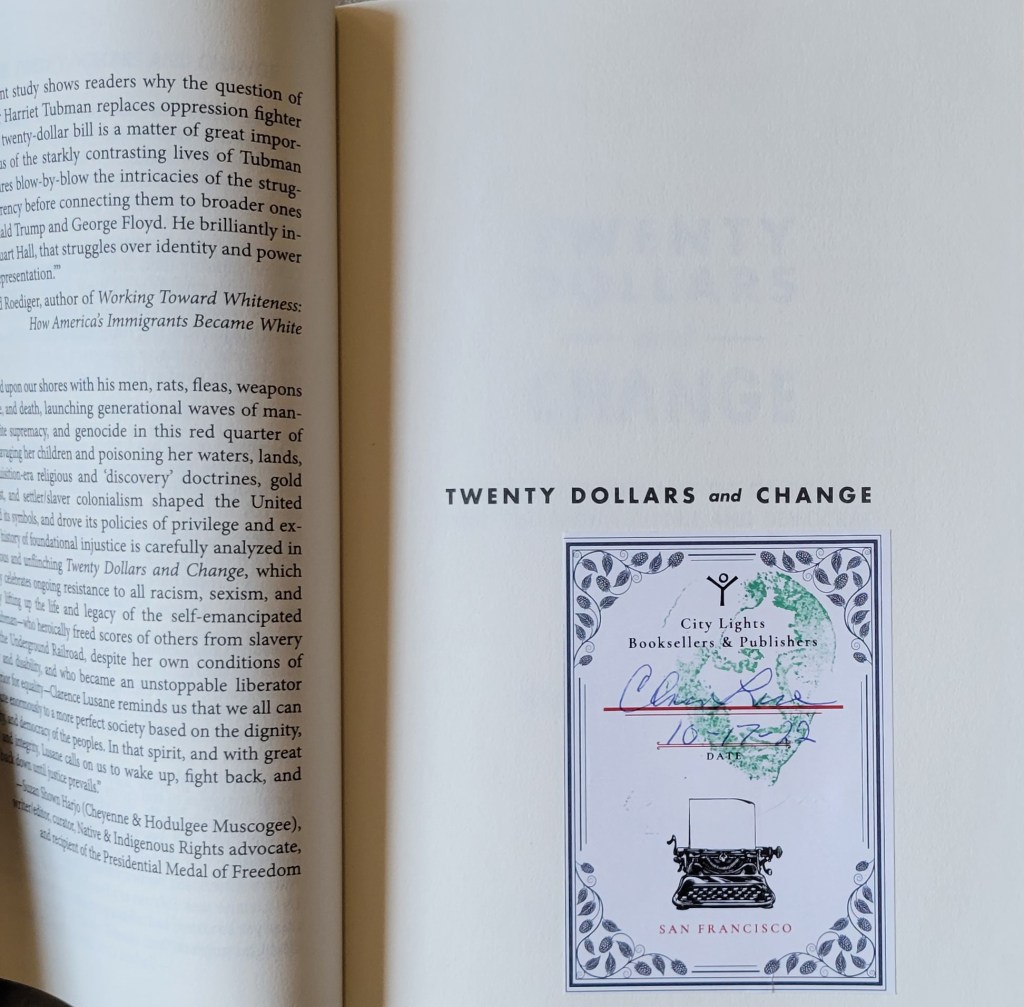
San Francisco’s City Lights Books invited Dr. Clarence Lusane to speak about his new book, Twenty Dollars and Change: Harriet Tubman and the Ongoing Fight for Racial Justice, with moderator, Justin Desmangles. As I watched the livestream on November 21 of this year, the symbolism of Tubman awakened my memory. The cover of Dr. Lusane’s book reminded me that an image of Harriet Tubman had once been my profile picture on twitter.

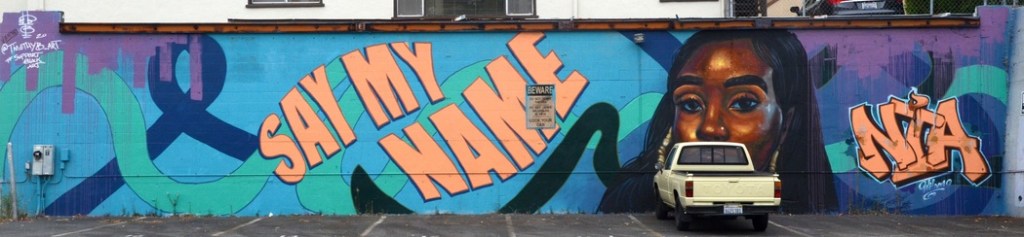
Although I might have forgotten my selection of images for social media, the reasoning and emotions behind the choice were very present. In July 2018, I craved an image that symbolized freedom for my twitter profile pic. Nia Wilson had just been murdered and her sister, Lahtifa, stabbed while they, along with a third sister, Tayisha, waited for a train at an Oakland subway station. The stabbing murder forced me to consider how Black people in the U.S. still were not free. Eighteen-year-old Nia Wilson, a Black woman, was killed by John Lee Cowell, a twenty-seven-year-old White man. Cowell had been on the same train as the sisters prior to the stabbings. And despite his expressing in court his anger about being punched by a Black woman a week prior to the stabbings, and despite his having called another Black woman the N word on a city bus as he fled the crime scene, the murder of Nia Wilson was never ruled a hate crime. For me, the physical and emotional injuries inflicted on the Wilson family, along with the seemingly countless murders of Black people that filled social media from the deaths of Trayvon Martin to Sandra Bland to George Floyd highlighted the colonial nature of Black life in the U.S. The same political and economic forces that had labelled us less than human as they drug us through the Middle Passage, that had forced us to work in bondage with, to date, no compensation, and that had deemed us second-class citizens under fascist Jim Crow were still operational.

Before choosing the Tubman pic for my profile, I’d had so many profile names and pictures during my fourteen years on the social media site that I can’t remember them. After the murder of Nia Wilson, I’d chosen Tubman because as both a runaway and an abolitionist, she symbolized freedom. Freedom from the white supremacy ingrained in capitalism, freedom to be Black and a woman, freedom to make choices about how the Black community in the U.S. chose to live, freedom to find liberatory spaces.

During my years of Twitter usage, I witnessed how the site had been instrumental in several political movements during the early part of this century – the Arab Spring, the Indignados in Spain, Occupy Wall Street, Black Lives Matter, and EndSars in Nigeria. I’d later seen counter-revolution stifle the Arab Spring when authorities began policing social media and jailing activists. In Nigeria government officials froze the bank accounts of protestors or chased them into exile. And in the overdeveloped West, authorities silenced some activists while global capitalism proved itself capable of incorporating liberals from the Indignados, Occupy, and BLM movements into the status quo of electoral politics or career activism. These were activists who had failed to base their protest on the most radical of political demands.

Prior to the Musk takeover of twitter, I’d thought of the social media site as a space where leftists could not only keep up with political developments, but also engage in conscientization and grow in leftist theory. I’d seen the joking statements made by twitter users who said they came to the site as a liberal and ended up an anarchist. Given the political space in which we found ourselves, it’s not surprising that twitter attracted Black activists. It has been a space in which Black nationalists, Pan Africanists, feminists, leftists, and radicals could converge to share ideas and battle in ideology. If Frantz Fanon and Malcolm X advocated the termination of colonialism and human degradation by any means necessary, then twitter appeared one means of doing so.

While I was aware of the contradiction of using a capitalist site like twitter as a leftist political space under the helm of Jack Dorsey, I, like countless others, am even more aware of this insurmountable irony under twitter’s new ownership. Musk’s reactivation of rightwing accounts has resulted in some liberals and radicals abandoning the site. If people haven’t quit the site altogether, many are using it less as they drift towards other social media alternatives. More importantly, other activists are more determined to do up-close organizing on the ground with marginalized and oppressed communities.

Harriet Tubman was the last profile picture I used that wasn’t my own. I didn’t remove the Tubman image because I felt that the circumstances that led up to the killing of Nia Wilson no longer existed. The needs of Black people in the U.S. and those of the global Black community are more urgent than ever. Nor did I do so because of my demoralization with leftist politics. While respecting people who choose not to use their own names and likenesses, I simply reached a point in which I wanted to acknowledge and embrace the legacy of Harriet Tubman while representing myself. I remain committed to radical liberation in the West and the termination of a political economy that underdevelops Africa as it extracts the continent’s natural resources and labor on the cheap.

Our Sleepwalking Towards Death with Gabriel García Márquez

At eighteen, with my first year of community college completed, I flew alone from Los Angeles to Mexico City. After several days of scouring bookstores, I brought back a suitcase full of novels, poetry, and history books.

I had begun my college studies as a talented Spanish major whose first published poetry — both bilingual and all-Spanish — had been accepted in Americas Review (University of Houston). As a young African-American writer whose first language was English, I shunned away from English-language literary journals because I lacked confidence they would publish my writing. Even then, decades back, I was aware that the publishing industry was a majority-White profession, and I perceived it as a barrier through which I would not be able cross. Social change, my dedication to craft, and persistence have allowed me to move beyond that barrier and get my work published in numerous English-language journals.

Given my skills in the Spanish language, I didn’t hesitate recently to read the short story, “Amargura Para Tres Sonámbulos” (“Bitterness for Three Sleepwalkers”), by Gabriel García Márquez in Spanish. Reading English translations of Spanish-speaking writers creates a thin linguistic veil between myself and the writer that I try to avoid. In the story, Márquez’s first-person-plural narration allows his two sleepwalking narrators to tell a story about a third who is a woman. The two narrators reveal to us, “Estábamos haciendo lo que habíamos hecho todos los días de nuestras vidas” (“We were doing what we had been doing every day of our lives.”) Their emphasis on the humanity of the woman sleepwalker – who lives in the underground — underscores how sleepwalking is an analogy for the process of life. On one occasion during her walk, she falls to the ground and starts eating dirt; yet, she still isn’t dead. The two narrators inform us that the more she walks around the house at night, the more she begins to look like death.

By using the sleepwalking metaphor for the process of a life approaching death, García Márquez makes the finite quality of material life abundantly clear. His magical realism presents three characters who move through the narration like phantasms of our imagination, so thinly clad that they need no names nor any physical description.

Using García Márquez’s number of three, I offer three pressing topics in the world today that we, as humanity, engage with as if sleepwalking. I will refrain from naming them, allowing the reader to use speculation (of which magical realism is a part) to discern the topics of discussion. I have likewise personified my sleepwalkers as women.

She sits at the outdoor table as clouds form in the dry atmosphere. One raindrop falls to the dark brown table as the wind blows the clouds away, assuring no rainfall. She remembers how months, years have passed with barely a sprinkle. She half gazes towards the parched earth, one eye open and the other closed, confident in the technology of dams and irrigation. Faraway, in the Southern hemisphere, no rain means starvation and death. While further off in the tropical regions, torrential rains flood the land, washing away homes and livelihoods, and later leaving stagnant waters that breed disease. Lucky, she puts on her dark sunglasses and feels the warmth of the sun lulling her to sleep.

Six hundred years of extraction on the Atlantic side. Six hundred years! She enters the house, unties the Ankara fabric from her head, rushing to complete her studies while there is electricity. Recalling the words of the professor in class today, she ponders the extraction first of people and then minerals, natural resources, and land from the continent. She must find that chapter her professor was referring to. She sits in the chair, resisting sleepiness, and begins flipping through pages. There it is. She reads how the West and others have ensured that full industrialization of products cannot happen on the land, that the profits are drained away to far-off corners of the world and not given to them — the rightful owners of the wealth. She then sits back, the hanging light flickering off and on, and starts to doze.

She knows that nothing can resuscitate a life that is gone. There is no incubator for a dead body. She saw the bullet hit, pierce skin, spew blood across the linoleum floor, stop a vital organ. The life was lost. She is not sure whether it was a shopping mall, a church, or a schoolroom. Stretched out on the carpeted floor, she covers her head with the blanket to hide from the reality of twenty to forty percent of the world’s guns in her one country. Something about a law written on paper 240 years ago. End of question. End of discussion. End of life.

The Civil Rights Movement & the Haitian Revolution Never Ended

The Civil Rights Movement, like the Haitian Revolution, never ended. This idea crossed my mind as I read the essay, “On the Marvelous Real in America” by Cuban writer, Alejo Carpentier. In his discussion on magical realism in Latin American writing, Carpentier refers to synchronism and how events recur in Latin American creative writing; they continue to happen. In other words, magical realism defies the notion that historical and life events begin and end at a specific time as the Western mind would have us believe.

Carpentier distinguishes magical realism from European Surrealism. Comparing the two artistic movements, he views European writers and artists subtly trying to force magic, whereas in Latin America everyday people and creatives have faith that surreal events actually happen.

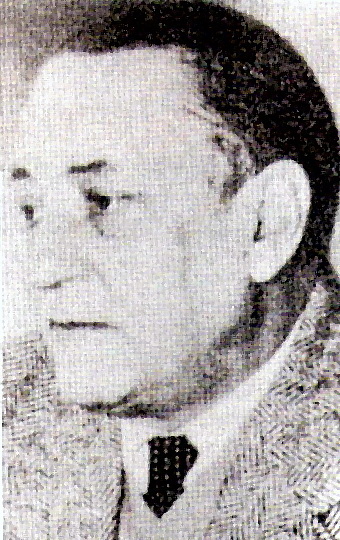
While reading his essay, I incorrectly assumed that Carpentier was trying to flaunt his knowledge of Western Civilization, since there are myriad references to Kafka, Voltaire, and other European writers. I was unaware of how much of his life was spent in Europe. Carpentier was born in Switzerland in 1904 to Cuban parents. During his adulthood as a novelist, essayist, and musicologist, he traveled back and forth between Europe and Cuba. At seventeen, he began his higher education in Cuba, but left in 1928 because of his opposition to the dictatorship. He returned to the island after 1959 as a supporter of the Cuban revolution, and eventually he became Cuban Ambassador to France. After his death in France in 1980, he was buried in Cuba.

In his essay, he describes how his travels took him to the People’s Republic of China, Iran, and the USSR. In each location he contemplated art, architecture, the environment, and the people. But it was in Haiti where he first encountered magical realism. His example is that of Dutty Boukman, an early leader of the Haitian Revolution. Born in Senegambia in 1767, Boukman was enslaved, sent to Jamaica, and then to Haiti where he became a leader amongst an escaped community of Maroons. In 1791 he was presiding over a religious ceremony which then became the catalyst for a slave revolt that ignited the revolution. Threatened by the revolt, the French colonizers killed him and then felt pressured to display his head to the Haitian enslaved to banish the atmosphere of invincibility he had cultivated. In other words, despite the French killing Boukman, the Haitian people continued to perceive of him as amongst the living.

I contemplated how Western colonizers, in an effort to impose Western time on those they seek to control, will kill those who rebel against their oppressive social order. The goal is to designate both a specific beginning and ending that can be measured logically. But as Carpentier tells us in reference to magical realism, the reality for the oppressed and marginalized isn’t so neatly packaged. Synchronism allows for events, despite their appearing to die down, to continue to happen by bursting forth again. In this sense the Haitian Revolution never ended because the cause for the revolt continues to spark unrest and has not been resolved. Likewise, the Civil Rights Movement and the Black Power movement for liberation which it birthed have not ended. If they had, the Black Lives Matter Movement, for all its successes and shortcomings, would not have sprung forth. Western power conspired to assassinate Martin Luther King, Jr and Malcolm X, to kill them in the logical expanse of time, but the movements that they became symbols of live on.

Carpentier says that the oppressed rely on faith that the surreal happens, and he states that this faith allows for various realities to occur simultaneously. I like to think that magical realism exists at the point of not knowing. There is so much that we don’t know about Native genocide, the Middle Passage, and Black enslavement. For me, that is where the speculation comes in and where the writer calls on magical realism to fill in the gaps. And, yes, those gaps demonstrate how historical and personal events continue to occur.

Carpentier leaves us with the belief that “improbable juxtapositions and marvelous mixtures exist by virtue of Latin America’s varied history, geography, demography, and politics.”

Alejo Carpentier