Book Readings in the Los Angeles Area

Looking back on my past two months attending book readings in Los Angeles, I’m inspired and energized by the manner in which these gatherings create community!

Connecting on social media is great, but real life is so much better. In-real-life events allow us to detect nuances we just can’t perceive when we interact digitally. And the connections we make are more authentic and lasting.

I found and/or rediscovered literary spaces where I feel at home. And I even became a member of Women Who Submit!

So which events did I attend?

At Skylight Books in the Hollywood area, I heard Michelle Gurule talk about her new memoir on sugaring titled Thank You, John. Brandon Taylor engaged in conversation about his novel Minor Black Figures which portrays a NYC painter pondering life and art.  And Myriam Gurba read from her hybrid memoir about plants and memory titled Poppy State and then passed out seeds to members of the audience.

On the westside at Beyond Baroque, poet and author Kevin Young read from two books — A Century of Poetry in the New Yorker: 1925-2025, edited by himself, and Night Watch, his newest book.

In East LA at Espacio 1839, editor Romeo Guzman accompanied Jenise Miller, Elaine Lewinnek, and Peter Chesney as they read from their essays in the anthology Writing the Golden State while George Sanchez-Tello performed and read as well.

Toni Ann Johnson read from her short story collection But Where’s Home? at a Women Who Submit event in Highland Park.

And never to be outdone, Reparations Club in South LA hosted Michaela Angela Davis as she engaged in conversation with Authur Jafa about her memoir tenderheaded.

I closed off this sprint of events in Santa Monica by attending the PEN America Emerging Voices LA Workshop reading. It was thrilling to hear participants read from their fiction, nonfiction, and poetry and to reflect on my experience as a PEN honoree and participant last year. 

I can’t wait to see what the new year brings in readings and lit events!

AWP vs LA Festival of Books

Los Angeles hosted two large book events within two months, and I attended both. Was one better than the other? I think not. They both focused on their audience and did so quite well.

March was abuzz with AWP and the writers who visited from across the country and internationally to make the city grand!

Association of Writers and Writing Programs hosted 12,000 writers, editors, publishers, book sellers, college programs, and others at the LA Convention Center. Amazingly, I didn’t just attend. I also presented for the first time! I was on the “New Literary Forms for a New Los Angeles” panel moderated by Claire Phillips. Along with Claire, I was proud to accompany writers Steph Cha, Sesshu Foster, and Gina Frangello.

Challenge number one was to calm my nerves! This was my first time presenting at AWP. The closest I’d ever gotten to presenting at AWP was participating in an off-site event alongside my publisher, Another Chicago Magazine, at AWP Seattle in 2023. But practice paves the way for perfection. And practice I did, even though my goal wasn’t to be perfect. I just wanted to be prepared enough so that if I made a mistake, I’d be able to regain composure and keep it moving.

As an attendee, I made my way to the panel “Do the Hustle: How to Publicize Your Book.” Luckily, I am reaching that yearned-for point in the writing process in which I get to focus now on submission, marketing, and publicity. So, it was great hearing how authors are clearing their own pathways to sales in an era in which publishers do less book promotion.

The panel “Literary Production During Authoritarian Governments” hit the right notes of concern and caution given our current administration in D.C. I share in the presenters’ belief that it’s imperative we continue writing and resisting during this era of book bans and limited funding.

“We Beautifully Outside: Informal Writing Collectives, Community and Kinship” was a wonderful reminder of the power of writing groups and how they have nurtured Black women writers in Los Angeles, Sacramento, and Seattle.

In April, LA Festival of Books had about 160,000 people in attendance and was more about casual engagement. Let’s face it, at AWP writers are speaking to their peers — the toughest audience sometimes.

Because AWP and LA Festival of Books were back-to-back in the same city, I picked up on the different tone right away. At the book festival, authors speak to their readers. So, the presenters delve into the content of the text more so than the writing process that led to its creation. Their presentation is more relaxed because they want to meet their audience halfway, and their audience is simply out and about enjoying their weekend.

For me, panel number one was “Existential Memoirs.” As a writer of hybrid memoir, I search out this genre. The panel was moderated by Gina Frangello, my co-panelist at AWP, and included authors Meghan Daum, Lyz Lenz, and Glynnis MacNicol. The women covered a wide range of topics including relationships, motherhood, the humor of daily life, and the horror of contemporary politics.

And finally, the “Speak Out” panel on writing and activism was moderated by journalist Jonathan Capehart and included authors Ibram X. Kendi, Aida Mariam Davis, and Rita Omokha. I loved that this panel had a Pan African scope, with presenters of US, Ethiopian, and Nigerian heritage. Their call to activism was rooted in US reality but stretched across the African/Black diaspora and highlighted the need to act locally and analyze globally as we draw on Black activism from the past to traverse the winding roads of an uncertain future.

My Interview at Write or Die Mag

Last month I was featured in the Write or Die Magazine Newsletter. Write or Die Mag is on Substack, and they have a huge following of more than 11,000 subscribers. They publish short stories, essays, and interviews.

Check out the interview here.

Write or Die Editor and prolific writer Brittany Ackerman kindly invited me to participate in the GRWM (Get Ready With Me) feature. In the interview, I discussed my favorites — a favorite bookstore, recent book, winter purchase, and brunch order. I also recalled my best and worst writing advice.

Why Samuel Beckett: A Black Writer’s Perspective

Studying Waiting for Godot by Samuel Beckett during junior year at UCLA was the final straw that pushed me towards mental and emotional exhaustion. I had overextended myself academically by taking too many classes during spring and summer quarters; and, studying Beckett in the fall led to questioning my Catholic faith and having to take a quarter off from my studies.

When I heard that OR books was publishing a hybrid memoir titled Beckett’s Children by Michael Coffey, I rushed to pre-order it. Coffey’s memoir, published in July this year, offered a sense of relief because I had worried that the allusions to a modernist writer in my memoir manuscript might seem a bit dated. But here was a memoir published in 2024 proving me wrong.

Unlike Coffey’s book, there are no continuous references to Beckett in my manuscript. Studying Beckett’s Waiting for Godot is pivotal to the inciting incident in chapter one because it causes me to doubt my faith. In Beckett’s Children, on the other hand, the author’s inciting incident centers around the idea that the Irish author may have fathered the American poet, Susan Howe.

Threads running through Coffey’s hybrid memoir include the stated curiosity about a familial bond between Beckett and Howe, Coffey’s literary research on the two writers, his own history as an adoptee, and his relationship with his son who is a three-time felon and addict.  In my manuscript, I weave in the history of Black Los Angeles beginning with the founding of the city by the Spanish.

Coffey’s description of airports and prisons as structures distinguished by their “architecture of waiting” stood out to me. This description was impactful because I’m familiar with Professor David Harvey’s description of the revolutionary potential of airport workers who are a class in themselves with the potential of becoming a class for themselves. In contrast, prisoners are the most captive humans on US soil; and prison is where the US Government has sent revolutionaries, such as members of the Black Power Movement and the Black Panther Party. So, I found the analogy of prisons and airports interesting because the two structures can also be considered exact opposites.

I recommend Beckett’s Children because one or more of the four narrative lines the author weaves into his hybrid memoir will grab your interest and pull you through the author’s skillful storytelling until the last page.

Cop Brutality: @Memphis and Nigeria’s #EndSARS

“But somehow we survive

severance, deprivation, loss

Patrols uncoil along the asphalt dark

hissing their menace to our lives,

most cruel, all our land is scarred with terror,

rendered unlovely and unlovable;

sundered are we and all our passionate surrender

but somehow tenderness survives.”


-Dennis Brutus (from “Somehow we survive”)


MY MEMPHIS TRAUMA REVOLVES AROUND THE UNIVERSE OF WILEY BENTON WHO WAS ONE OF TWELVE CHLDREN BORN TO MY MATERNAL GREAT GRANDPARENTS, BUD AND LETTIE BERNETTE BENTON.  THE BROTHER OF MY GRANDMOTHER, DOLLIE, A YOUNG WILEY LEFT HOME TO RUN AN ERRAND, ONE DAY IN 1930’s MEMPHIS. HE WALKED IN A PART OF THE CITY WHERE HOUSES FADED INTO TREES AND WHERE THE PAVEMENT DRIFTED TO DIRT ROAD, CHANGED TO LEAVES AND BRANCHES UNDERFOOT, SNAPPING AND BREAKING BENEATH HIS FOOTSTEPS. HOURS, DAYS LATER, WILEY NEVER RETURNED HOME. NEVER. HIS WAS THE EMPTY PLATE AT EVERY FAMILY REUNION IN MEMPHIS AND DURING ALL THE CHRISTMAS DINNERS OF HIS SIBLINGS IN CHICAGO AND LOS ANGELES.

on January 7, 2023 police officers pulled over TYRE NICHOLS for alleged reckless driving. what should have been a routine stop turned instead to his battle with death as five police officers beat and tased the 29-year-old to death. TYRE, father to a four-year old, was a skater who had a website called “THIS CALIFORNIA KID” documenting his skating life in sacramento. he had come to memphis during the pandemic to live with his MOM and was working with his STEPFATHER at fedex. his killers were members of the memphis police unit called scorpion (street crimes operation to restore peace in our neighborhoods) that the department formed in november 2021. following the murder of TYRE, the unit was disbanded.

in nigeria, there had been years of complaints about the police unit called sars (special anti-robbery squad). authorities formed the unit in lagos in the early 1990’s, and later it was expanded as part of a national police strategy. nigerian citizens complained of being arrested, detained, and tortured by sars officers.  two incidents in 2020 set off national and international protests against the police unit – an arrested MAN falling off a police vehicle in early october in delta state who onlookers presumed dead and then police killing protestor, JIMOH ISIAKA, on october 10 in oyo state. a few days after those two incidents and their subsequent protests, the police replaced sars with a new swat unit.

INDULGING IN HER ROLE AS THE BEST SOUL FOOD CHEF OF THE TWO MEMPHIS SIBLINGS THAT MIGRATED TO L.A., MY AUNTIE TILLIE COOKED CHRISTMAS DINNER AT HER HOUSE EVERY YEAR. TILLIE (HAYDEE MAE) WAS AN OLDER SISTER OF MY GRANDMOTHER. AS THE TWO OF THEM TALKED ABOUT MUNDANE INCIDENTS OF DAILY LIFE, THEIR CONVERSATION MEANDERED TOWARDS MEMPHIS MEMORY WHEREUPON THEY EVOKED THE EMPTY PLATE OF THEIR BROTHER WILEY. AND FROM WILEY, MY AUNT TILLIE ALWAYS SHIFTED TO STORIES OF HER LATE HUSBAND, DAVID, WHO DIED A YOUNG MAN YEARS BEFORE I WAS EVER ABLE TO MEET HIM. DAVID SERVED IN THE SEGREGATED MILITARY OF THE UNITED STATES, AND HIS IMAGE, WITH HIM IN UNIFORM, STARED OUT AT US FROM AN END TABLE IN MY AUNT’S LIVING ROOM. WITHOUT FAIL, AT SOME POINT IN THE EVENING, AUNT TILLIE WOULD BEND OVER HER WOODEN RECORD PLAYER, PICK UP THE NEEDLE AND PLACE IT ON DINAH WASHINGTON’S LP JUST AT THE LINE WHERE “A COTTAGE FOR SALE” BEGINS.

the five officers who killed TYRE NICHOLS in memphis were fired. as the nation goes through these cycles of police abuse and firings, we know that firing officers doesn’t end our colonial status as Black people within a system of white supremacy. Journalist CHRIS HEDGES recently stated that the “military and police forces in the u.s. function as armies of occupation” stabilizing corporate colonialism. despite the five officers being black, they derive their agency by ensuring the social system functions for a business-as-usual economics that benefits the few. within capitalism, the “representationalist” aspect of identity politics, to quote the late GLEN FORD, hasn’t saved us from losing forty percent of our wealth since 2008, nor from being forty percent of the nation’s homeless while accounting for only fourteen percent of the population.

at a press conference in memphis, police officials said, “…”


despite protests across nigeria over police brutality, police and hired thugs continued to kill PROTESTORS. during the october 2020 protests in lagos at the lekki toll gate, soldiers attempted to restore order. order in nigeria includes maintaining control over crude petroleum – a crucial global resource and the nation’s largest export; one percent of the population owns eighty percent of the nation’s oil wealth. despite PROTESTORS waving the nigerian flag and singing the national anthem, soldiers stormed and shot at them. the military killed at least forty-eight PEOPLE and another ninety-six CORPSES were later found.

at a news conference in lagos, authorities promised, “…”


THE MUSIC PLAYING, AUNTIE STOOD IN HER DINING ROOM, RAISED THE SCOTCH AND COKE TO HER LIPS, AND TOOK A SIP. HER LIPSTICK LEFT A RED STAIN ON THE GLASS. SHE POINTED TO HER FOOD PREPARED MEMPHIS STYLE AND SAID, “YES, DAVID LOVED MY COOKING.” MY GRANDMOTHER, SISTER TO BOTH AUNT TILLIE AND THEIR DISAPPERARED BROTHER, WILEY BENTON, SMILED. I REALIZE NOW THAT MY AUNT COOKED NOT JUST FOR THE LIVING, BUT FOR THOSE WHO HAD PASSED AWAY.

MAKING WAY FOR US TO EAT, AUNTIE WALKED TO THE KITCHEN AND RETURNED WITH PLATES SHE THEN PUT ON THE TABLE. THERE WERE DISHES FOR EVERYONE AND A FEW PLATES THAT WOULD PASS THE NIGHT EMPTY. NOTICING HER SONG HAD REACHED ITS END, MY AUNT BENT OVER THE WOODEN RECORD PLAYER, PICKED UP THE NEEDLE, AND PLACED IT BACK AT THE BEGINNIG OF DINAH WASHINGTON’S SONG.

WITH HORNS AND BASS PROPELLING HER FORWARD, DINAH VOCALIZED, “FROM EVERY SINGLE WINDOW, I SEE YOUR FACE. BUT WHEN I REACH THAT WINDOW, THERE’S

EMPTY


SPACE.”


SOURCES

The accounts of police brutality directed at Tyre Nichols are from:

“Woke Imperialism” by Chris Hedges in The Chris Hedges Report” (San Francisco: Substack, Feb 5, 2023)

“We’re not done: end of Scorpion Unit after Tyre Nichols death is first step, protestors say” by Edwin Rios in The Guardian (New York: Jan 29, 2023)

“Colonial-Capitalist Fascism and its Deadly Outcome: The State Murder of Tortuguita in Atlanta and Tyre Nichols in Memphis Are Inextricably Linked” by Black Alliance for Peace Atlanta in Black Agenda Report (USA: Feb 1 2023)

The accounts of police brutality in Nigeria are from “The massacre at the Lekki Toll Gate” by Femi Falana SAN in The Guardian Nigeria (Lagos: Nov 24 2021)

The statistic on Nigeria’s oil wealth is from “Imperialism, dependence, development: Legacies of colonialism in Africa” by Lee Wengraf in International Socialist Review (Chicago: Center for Economic Research and Social Change, Issue 103, Winter 2016-17)

Our Sleepwalking Towards Death with Gabriel García Márquez

At eighteen, with my first year of community college completed, I flew alone from Los Angeles to Mexico City. After several days of scouring bookstores, I brought back a suitcase full of novels, poetry, and history books.

I had begun my college studies as a talented Spanish major whose first published poetry — both bilingual and all-Spanish — had been accepted in Americas Review (University of Houston). As a young African-American writer whose first language was English, I shunned away from English-language literary journals because I lacked confidence they would publish my writing. Even then, decades back, I was aware that the publishing industry was a majority-White profession, and I perceived it as a barrier through which I would not be able cross. Social change, my dedication to craft, and persistence have allowed me to move beyond that barrier and get my work published in numerous English-language journals.

Given my skills in the Spanish language, I didn’t hesitate recently to read the short story, “Amargura Para Tres Sonámbulos” (“Bitterness for Three Sleepwalkers”), by Gabriel García Márquez in Spanish. Reading English translations of Spanish-speaking writers creates a thin linguistic veil between myself and the writer that I try to avoid. In the story, Márquez’s first-person-plural narration allows his two sleepwalking narrators to tell a story about a third who is a woman. The two narrators reveal to us, “Estábamos haciendo lo que habíamos hecho todos los días de nuestras vidas” (“We were doing what we had been doing every day of our lives.”) Their emphasis on the humanity of the woman sleepwalker – who lives in the underground — underscores how sleepwalking is an analogy for the process of life. On one occasion during her walk, she falls to the ground and starts eating dirt; yet, she still isn’t dead. The two narrators inform us that the more she walks around the house at night, the more she begins to look like death.

By using the sleepwalking metaphor for the process of a life approaching death, García Márquez makes the finite quality of material life abundantly clear. His magical realism presents three characters who move through the narration like phantasms of our imagination, so thinly clad that they need no names nor any physical description.

Using García Márquez’s number of three, I offer three pressing topics in the world today that we, as humanity, engage with as if sleepwalking. I will refrain from naming them, allowing the reader to use speculation (of which magical realism is a part) to discern the topics of discussion. I have likewise personified my sleepwalkers as women.

She sits at the outdoor table as clouds form in the dry atmosphere. One raindrop falls to the dark brown table as the wind blows the clouds away, assuring no rainfall. She remembers how months, years have passed with barely a sprinkle. She half gazes towards the parched earth, one eye open and the other closed, confident in the technology of dams and irrigation. Faraway, in the Southern hemisphere, no rain means starvation and death. While further off in the tropical regions, torrential rains flood the land, washing away homes and livelihoods, and later leaving stagnant waters that breed disease. Lucky, she puts on her dark sunglasses and feels the warmth of the sun lulling her to sleep.

Six hundred years of extraction on the Atlantic side. Six hundred years! She enters the house, unties the Ankara fabric from her head, rushing to complete her studies while there is electricity. Recalling the words of the professor in class today, she ponders the extraction first of people and then minerals, natural resources, and land from the continent. She must find that chapter her professor was referring to. She sits in the chair, resisting sleepiness, and begins flipping through pages. There it is. She reads how the West and others have ensured that full industrialization of products cannot happen on the land, that the profits are drained away to far-off corners of the world and not given to them — the rightful owners of the wealth. She then sits back, the hanging light flickering off and on, and starts to doze.

She knows that nothing can resuscitate a life that is gone. There is no incubator for a dead body. She saw the bullet hit, pierce skin, spew blood across the linoleum floor, stop a vital organ. The life was lost. She is not sure whether it was a shopping mall, a church, or a schoolroom. Stretched out on the carpeted floor, she covers her head with the blanket to hide from the reality of twenty to forty percent of the world’s guns in her one country. Something about a law written on paper 240 years ago. End of question. End of discussion. End of life.

Black Women Won’t Save the World

“Black Women Won’t Save the World”

For: Erica Garner


Despite pronouncements to the contrary, Black Women won’t save the world.  Notwithstanding the circumference of the Cradle of Civilization in South Africa nestled in a locale from which all human beings originate; regardless of the excavations in Ethiopia of both Lucy and Ardi marking the evolution of homo erectus and what that signifies to the world in the evolutionary flowering of life, the act of waiting 27 years in a Mandela-like manner is far beyond the dexterity of even the most steadfast amongst us.  So, please do not expect it, since what a girl really wants is to be a first in Africa as President of the former American Colonization Society (aka, Liberia) to show the world how it’s really done following the commendable lead of Brooklyn-and the-Caribbean’s Chisholm who made her bid as leader of the entire Empire after the sea having been parted by that group of women who were so good at either whispering or shouting:

“Come along with me.”

(You know the ones.)

Those who say: “Come on now.”

“Don’t give up.”

Those that question: “Why can’t you do that, too?”

Harriet Tubman.

Sojourner Truth.

Rosa Parks.

But they can’t do it all.  They can’t continue to clean up the mess of Western Civilization epitomized in the world’s largest economy that works overtime like an oversized fan both amassing resources and throwing out products.  They can’t continue to wipe the mouths of temperamental children.  Black women will not save the world with a sweeping lift of the train of their gowns as they walk on stage and, with a Hattie McDaniel smile, accept their award.  Even though the world expects that they listen Oprah-style to its dilemmas and then offer pats on the back; even though society would have them sweeten reality like Aunt Jemima; even though segments of American politics cross their fingers waiting for Black Women to show up at the polls to circumvent the country’s tendency to worship totalitarian totems, it goes against the grain.  When all a girl wants is fresh food that can’t be bought at a liquor mart, healthcare that can’t be provided at a storefront, dignified employment that can’t be applied for amidst corporate outsourcing, ownership that can’t be acquired in economic inequality, safety that can’t be granted by the 2nd Amendment, and for her sons and daughters to live a freedom that can’t exist in a society of colored-only mass incarceration.  So, no, Black Women (who have been my sustenance) will not save a world that reduced Lucy to an objectified Sara Baartman, Hottentot Venus to be paraded around European freak shows to exhibit her large buttocks.  Regardless of their self-imposed exile to Paris and refashioning themselves to seduce á la Josephine Baker or using the both life-saving and self-effacing tools of Madame C. J. Walker to accommodate white middle-class patriarchy, they may still face a court case named the “The United States of America vs. Billie Holiday” in which their Blues cannot even be contained in a volume by Toni Morrison.  If indeed “la vida es un carnaval,” I want Black Women to formulate it, but we can’t save a world that is not of our making, a world in which mothers were historically assigned double duty and fathers were denied last names.  Fathers were depleted of even air to breathe.  Fathers had to plead, “I can’t breathe.”

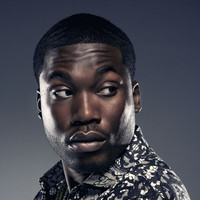
Meek Mill Didn’t Get Killt (Nonfiction in 3 Voices)

”Meek Mill Didn’t Get Killt (Nonfiction in 3 Voices)”

Voice 1: In the land of curt consolations, one that is most apparent is that Meek Mill didn’t get killt although surely that could have happened in the City of New York which garnered a recent reputation for snuffing the life out of the big man selling loosies on Long Island or the youngin confined to Rikers Island based on allegations of stealing a backpack the soul of whom was stolen from him so much so that he committed suicide.  Meek Mill’s case could have been otherwise.  He escaped that fate, if escape it can be called, given the rapper has been dragging the ball and chain of probation since 2009 for an incident that occurred as a teen; yet, given that the U.S. legal system, which markets in black and brown bodies, has acknowledged no change in him, no redemption; thus, the law, its judicial representatives, and police boots on the ground watch his every move coveting a new conviction and they find it when the rapper pops motorcycle wheelies on the set of a video filming.  Illegal.  Against the law.  2-4 years jail time.  Meek didn’t get killt.  He didn’t run from the cops who then took it upon themselves to feel fear and shoot him in the back.  He didn’t attempt to be the “trillest” and say, “Officer, I want to let you know I have a weapon,” and then get shot.  Point.  Blank.  He didn’t get into an argument at the liquor store and walk down the street only to get shot in the back.  None of that.  Meek Mill didn’t get killt.

Voice 2: On that one track Meek say, “They wanna see you in the hood back when you ain’t got shit.”  That be real tho.  That’s how the United States be operating on “Young Black America.”

Voice 1: Why do Blacks total forty percent of those incarcerated yet make up just thirteen percent of the U.S. population?  And why are one-third of those on parole in the U.S. Black people?  Black people and Brown people are disproportionately locked up.  Last name from that now-gone Spanish empire that surrendered to the force of both Anglo expansion and the consequent U.S. empire?  You know the one.  Persona de Mexico?  El Salvador?  Chances of being incarcerated abundant as well.  Practice a suspect religion.  Accent a bit odd.  Low income.  Scant education.  Behind bars.

Voice 2: On that one track when Meek and Thug say, “Lost so many niggas, I went crazy, I couldn’t balance it,” that be real too.  Like, you lose your peeps, and you be fucked up from the pain, like dizzy and shit, everything is out of wack, the city gets bigger and it’s just you standin there and all the traffic is goin in all different directions, and the empty house cuz that person ain’t there no more, just things, things to be cleaned up and horded so you can keep them or toss others in those large plastic trash bags to be dumped into oblivion, but you never forget cuz those people be in your heart always and on your mind at the oddest moments and when you look in the mirror, you be seein that person, them people, and when you speak, you hear they voices, too.

Voice 1: The challenge is to resist a culture of violent obliviousness in a broader society that would have us forget because the forgetting is dehumanization not only of the forgotten but of ourselves.  After September 11, 2001 when U.S. news networks faced the hardship of paying tribute to the souls lost in the Twin Towers, I remember looking at the scrolling photos of the deceased on the tv screen and realizing how beautiful everyday Americans were.  The photos, names, occupations of the victims were portrayed uninterruptedly.  Sixteen years later, in our society that increasingly shutters the finality of death as well as institutions like jails and prisons that impose forms of death on the living, we are increasingly not offered those commemorations, words from family members, the photos.  Just this year with the tragic human losses in the Las Vegas Concert shooting, the Texas church shooting, the hundreds of dead in Puerto Rico due to Hurricane Maria, we see meager mention of the victims.  The corporate news media, which has few reasons to seek revolt, moves on to the next story.  But as the poet says:

“No man is an island entire of itself; every man

is a piece of the continent, a part of the main;

…any man’s death diminishes me,

because I am involved in mankind.

And therefore never send to know for whom

the bell tolls; it tolls for thee.”

-John Donne


Voice 2: That be trill, tho.  John Donne was ride or die way back in the day.  Those some good lines.  It may be someone else today, your homie tomorrow, but eventually, it’s us.  One of my favorites from Meek’s album is, “Relax your mind and kick your feet way up/Selling dog food tryna feed my pups.”  We’re not forgetting Meek nor the many, many locked up.

Voice 1: “We Ball”?

Voice 2: Ballin.