Would you flee a fascist state?
Given the current state of US political affairs, I was left to ponder that question as I watched the LA Opera production of “Ainadamar” at the Dorothy Chandler Pavillon downtown. In the opera, the character who plays actress Margarita Xirgu tries to convince her friend Federico García Lorca – a poet, playwright, and theater director — to flee Spain as the country hurdles towards civil war. She goes into exile, but the poet refuses to leave. Xirgu then engages with the audience to tell the tragedy surrounding García Lorca’s last days during the Spanish Civil War of 1936-1939.
Why Federico García Lorca?
Upon hearing about this opera, I was compelled to see it. As I state in my hybrid memoir manuscript, I first learned about Federico García Lorca at age sixteen when my AP Spanish Literature teacher introduced me to two poets who had a lasting impact on my own bilingual poetry – García Lorca and Pablo Neruda.
García Lorca is the most prominent Spanish writer of the early twentieth century. Born in 1898 in Granada, Spain and assassinated in 1936, his literary influences were futurism, symbolism, and surrealism. While doing recent research on his life, I realized authorities have given various reasons for his death. Most prominent amongst them is the fact that he was gay and a socialist in a country that was moving further and further to the right.
Was the Spanish Civil War a proxy war?
I am a fan of hybrid memoir, so literature inevitably leads me to history. Because I read the book The Red Flag by David Priestland a few years ago, I reflected on the historical context of the opera as I watched the L.A. production. From Priestland, I learned how the far right in Spain gained more popularity as Hitler consolidated power in and around Germany. Before World War II, Spain, France, and Chile had formed popular front governments to combat fascism. The Spanish left had one of the most successful popular fronts – communists, socialists, and left liberals — in the Western world, and they won the 1936 election.
Regrettably, the leftist victory of the Spanish Popular Front was short lived because General Francisco Franco staged a coup in 1936, the year García Lorca was assassinated. The country endured three torturous years of civil war fought not only by its citizens but also by volunteers from over fifty countries. The fascist governments of Germany and Italy supported Franco while Stalin sent arms to the political left.
While doing recent research, I learned new details about the quickly shifting politics of 1930’s Spain. I knew from Priestland that Picasso became a card-carrying communist during the civil war era. But I also discovered that Chilean poet and Nobel Laureate Pablo Neruda was on diplomatic duty in Spain where he met García Lorca. Like Picasso, Neruda became radicalized as a communist, but he also lost his diplomatic post due to his beliefs. The Chilean poet also met Peruvian poet Cesar Vallejo and attended the 1937 Second International Writers Conference that Hemingway attended.
Despite the valiant efforts of the leftist resistance and the toil of a civil war that cut short 500,000 lives, the General gained control of the country. Franco banned García Lorca’s writing until 1953 — interestingly, the year Joseph Stalin died — and maintained his dictatorship until 1975.
A surprise for me was learning that after many years of tragic war and decades of dictatorship, García Lorca’s remains have never been found.
The LA Opera’s production of “Ainadamar” — conducted by Lina González-Granados of Colombia and choreographed by Antonio Najarro of Spain – was excellent. I appreciate how it put this history and García Lorca’s art on a Los Angeles stage for us to remember and reflect on the importance of resisting the destruction and dehumanization of far-right politics.
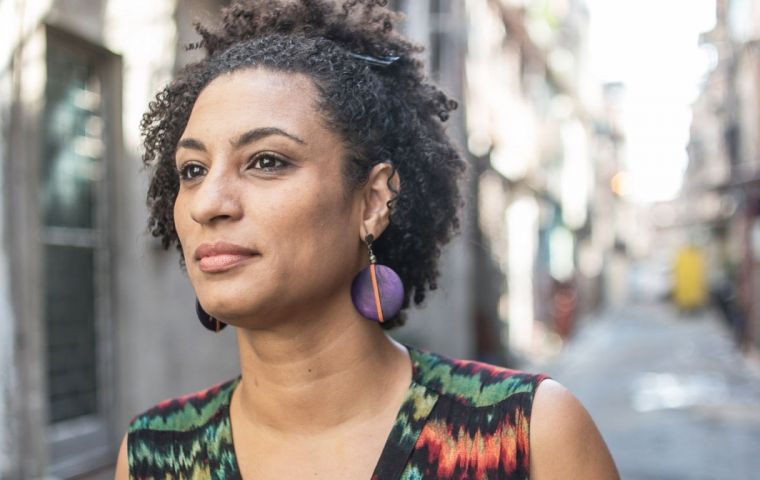
 Audrey Shipp