Political Illiteracy: How Audiobooks Saved Me

Maybe not audiobooks.

Maybe it was my American French teacher at UCLA Extension who carried copies of a communist newspaper in her knapsack and had a knack for pulling her hair back like Simone de Beauvoir.

Maybe it was Mexico City in the 1980’s and the pamphlets on Central American revolution.

Or maybe it was 12th-grade me reading Canto General I by Neruda -– prior to his rape confession.

Audiobooks A-H

Anarchism and Other Essays by Emma Goldman

Antonio Gramsci’s Prison Notes by Lorenzo Fusaro and Jason Xidias

Autobiography of Malcom X by Malcom X, Alex Haley

Back to Black by Kehinde Andrews

Black Against Empire by Joshua Brown and Waldo E. Martin Jr.

The Black Jacobins by C.L.R. James

Black Marxism by Cedric J. Robinson

Black Reconstruction by W.E.B. Du Bois

Brief History of Neoliberalism by David Harvey

China’s Second Continent by Howard French

The Communist Manifesto by Marx and Engels

A Concise History of the Haitian Revolution by Jeremy D. Popkin

Conquest of Bread by Pyotr Kropotkin

The Cultural Revolution by Frank Dikotter

The Declarations of Havana by Fidel Castro

Empire of Illusion by Chris Hedges

Freedom is a Constant Struggle by Angela Y. Davis

How Europe Underdeveloped Africa by Walter Rodney

***

Possibly it was my grandmother’s stories about 1920’s Tennessee.

***

I began living with my grandmother when I was five years old.  And she might have been that same age in Memphis when she started playing with the White girl across the way. It was coincidental that I heard my grandmother’s story at my age since the story was probably directed at my nine-year-old sister more so than me.

I’m not sure what Grandmom and the girl played with. A ball. Maybe rocks.

In Tennessee, my grandmother was the youngest of twelve kids. I don’t know if she ever got to see her sibling who passed away as a baby. I’m also not sure if she ever met her brother who disappeared. That was Wiley who went for a walk one day and never returned. Not ever. And the entire family was left wondering what happened to him in the woods of Memphis.

***

When I lived with Grandmom in Los Angeles, I played in the backyard of the Castilian duplex with my friend Linda who was not only my age but also the daughter of the Black man and woman who owned the beige duplex on the westside — between La Brea and Fairfax.

When I played in the backyard with Linda, one of us would sit on the small, flatbed, trash can cart and clinch the metal handle with all our might while the other spun the cart around on the concrete so we could pretend it was a carnival ride. On other occasions, we wound our waists until exhaustion inside the hot pink and fluorescent lime green Hula Hoops, challenged each other in jump rope, and in the hot summer months, we splashed along the plastic Slip ‘n Slide that lay on the grass. I even remember pulling a mere string around as I pretended it was a leash and imagined I was walking a dog.

But what happened in Memphis with Grandmom during her childhood was she got too old. That was when the mom of the White girl told her daughter she was too old to be playing with Black kids.

Maybe that’s why Grandmom always kept the pictures of Jesus and Martin Luther King, Jr. on the wall in her L.A. bedroom.

So, perhaps it was her stories that first taught me about politics.

Audiobooks I-W

Imperialism the Highest Stage of Capitalism by Lenin

Liberation Theology by Michael Lee

Malcom X by Manning Marable

Malcom X: The Last Speeches by Malcom X

Mao Zedong and China in the Twentieth-Century World by Rebecca E. Karl

Marcus Garvey: A Biography by Stephen Johnson

Marx, Capital, and the Madness of Reason by David Harvey

The New Age of Empire by Kehinde Andrews

The New Jim Crow by Michelle Alexander

Philosophy and Opinion of Marcus Garvey by Marcus Garvey

The Radical King by Cornel West

The Red Flag by David Priestland

Reminiscences of the Cuban Revolutionary War by Che Guevara

The Second Red Scare and the Unmaking of the New Deal Left by Landon R. Y. Storrs

State and Revolution by Lenin

Terrorism and Communism by Leon Trotsky and Slavoj Zizek

Vladmir Lenin, Joseph Stalin & Leon Trotsky by Charles River Editors

Why Marx Was Right by Terry Eagleton

***

But if it was audiobooks, it’s because they allowed me to see beyond the confines of a two-party system that offers more of the same – colonialism, capitalism, imperialism.

I’ve voted within the two-party system every election since adulthood, but with the knowledge that my choice wasn’t radical change. It was an effort to maintain civil rights within empire. The blindness of US politics is our avoiding how the U.S. operates as both nation and empire and thus, failing to acknowledge how the imperatives of empire are inhumane and bad for everyone around the globe.

But if it was audiobooks, it’s because as I listened, I scribbled notes on Post-Its. Often, I typed my notes into Google Docs that became pages of documentation.

And the audiobooks allowed me to see the nuances between fascism, conservatism, the various types of liberal laissez faire capitalism, and the many variations in leftist and radical politics. (US liberals would not be considered leftists in more politically literate nations in the world.)

***

But if it was audiobooks, it’s because over the years, they’ve helped me reflect on how I’ve vacillated between social democrat, democratic socialism, socialism, and anarchism. And always with an awareness of how the writings of Marx are crucial for an analysis of capitalism.

***

What if US liberals and radicals were as adamant about distinguishing nuance in politics as they are about gender? Especially on social media, it’s rare a person comes out of the political closet and says: “I’m a communist.” “I’m a democratic socialist.” “I’m an anarchist.” Instead, they leave it up to the listener to figure out their philosophical and political leanings. And if the listener is politically illiterate, the confusion begins. We’ve managed to un-closet gender, but we don’t apply these same standards to politics. (And we can’t expect this from those on the right who are in denial about their own fascism.). In a politically mature society, people would un-closet their politics.

***

After one hundred years of Red Scare anti-communism in the U.S., the closeting of leftist politics and the spread of political illiteracy from the highest levels of academia to the most remote corners of trade union politics have become the norm.

***

So, if it was audiobooks, I’m glad they challenged me. Because at some point, in this nation that publishes more books than any other, we must ask ourselves: What is the function of writing, publishing, and reading, if those activities don’t ensure the maintenance of democracy, healthcare, and education?


(Note: The beginning of this essay was inspired by the manner in which writer/poets Viteszlav Nezval –Czechoslovakia, 1900-1958 — and Teresa Wilms Montt — Chile, 1893-1921 — use repetition. I have been reading their poetry in recent weeks. In making that poetic rhetorical move, I was able to access the list of memories and then choose the one focusing on my grandmother.

I considered submitting this piece to a magazine, but I think the ending plods along and weighs the writing down. I also don’t think a magazine would go for the lists. But I think the lists are like poetry.)

How Kanye’s “Jesus is King” Sidelines the Liberation of the Oppressed

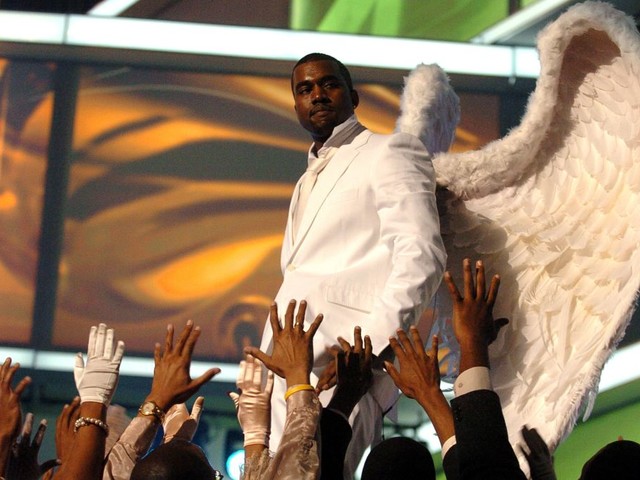
The latest creation from Kanye West doesn’t advocate for the liberation of oppressed people, if selections from the album, “Jesus is King,” and the pop artist’s promotion of it are used as evidence. Additionally, it is his backtracking on his 2005 criticism of George W. Bush following Hurricane Katrina as well as his recent alliance with millionaire televangelist Joel Osteen which highlight Kanye’s alienation from the poor, marginalized, and oppressed. In 2005 Hurricane Katrina killed 1800 people, the majority of whom were Black, in New Orleans and the surrounding Gulf areas of Louisiana. The tragedy of this catastrophic event resulted in Kanye’s statement on live tv that then President George W. Bush “didn’t care about Black people.” But by 2013 Kanye was backtracking his political statement by editing his outburst and then claiming that he had been affected by a “victimized, welfare mentality” and he had got “caught up in the idea of racism.” If in eight years Kanye was able to free himself from the shackles of American racism, that has not been the case for Blacks and people of color living within U.S. racialized capitalism, nor has it been the circumstances for the exploited non-whites in the Southern hemisphere whose labor and resources are appropriated by U.S. corporations operating overseas.

On his recent album, “Jesus is King,” Kanye’s lyrics become the great equalizer when, on the track “God Is,” he sings, “From the rich to the poor, all are welcome through the door.” This portrayal is not that of Jesus as champion of the poor as described by Black theologian of liberation, James Cone, who emphasizes that “God’s identity is defined by God’s solidarity with the poor…(and) with the oppressed.” In typical liberal fashion, Kanye attempts to have it both ways, to create a semblance of equilibrium in a world that is hugely out of balance economically and ecologically and that in reality favors the rich elites. On the same track, Kanye sings, “This ain’t about dead religion, Jesus brought a revolution,” but the revolution will not only fail to be working class, it will also not be Afrocentric because Kanye subtracted Black oppression and race from the question in 2013. Why Afrocentricity? Because as theologian Adam Clark states, “Afrocentricity is one of the ‘forces of liberation’ in the Black community. Liberation for Afrocentrists means revolutionizing Black consciousness and reconstructing Black culture.” Ignoring Black Theology of Liberation, Kanye offers his listeners and fans an alliance with tv evangelicalism and Joel Osteen. If as Adam Clark states, the “Christian faith has been a double-edged sword within the Black experience, (both) a weapon against Black people and a resource for resistance,” Kanye offers no resistance and instead presents us with Christianity as earthly subservience to the powers that be and a hope for salvation in the afterlife.

Kanye West’s recognition of the shallowness and commercialization of pop music, specifically his genre of rap, is made clear by his statement in the LA Times that “the devil stole all the good artists.” Commercial rap artists, who currently have a larger following amongst non-Blacks than Blacks, routinely present an image of Blacks as street thugs and perennial hustlers. The male-dominated genre continues to portray women as hypersexualized “hoes” with one of the differences being that now, in late capitalism, they are much more disposable. The lyrics encourage us to buy foreign, especially if the purchase involves European high fashion and expensive cars. In its shop-till-you-drop overtures, contemporary rap music situates itself in the center of corporate capitalism.

Yet Kanye’s rebirth in Christianity does not free him from the economic and political values of capitalism. Black theologian of liberation James Cone, in his reflections on Brazilian philosopher and educator Paulo Freire, defines three types of church – the conservative, the liberal and the prophetic. The prophetic church arose from Liberation Theology in Latin America and here in the States, from the Southern Christian Leadership Conference and Martin Luther King, Jr. Cone argues that the U.S. would not have had the Civil Rights Movement without the prophetic Black Church. Regardless, “Jesus Is King,” lyrically and in concert performances, delivers to the listener the liberalism of individual salvation and a conservative alliance with televangelist Joel Osteen who, with an estimated worth of $40-60 million, believes that God rewards with material gain.

No surprise then that the track “Closed on Sunday” has the eerie and empty feel of New York’s Wall Street on the day marked by Christians for rest. In late capitalism, especially in the U.S., if an individual wants to escape the isolation and alienation inherent in American society, a popular option is to purchase a sense of momentary community at an eatery or at least roam around in a shopping mall. If the desire is to be amongst people, one can go to a place of commerce any day of the week; yet, the conservative Christian company Kanye sings about, Chick-Fil-A, is an exception with its Sunday closure. On this track, Kanye upholds family values and prayer while condemning Instagram, selfies, and Jezebels, with the latter being, in the Old Testament, a deceitful whore who disregarded Jewish custom. In the New Testament Jezebel symbolizes a departure from religion, and in the secular U.S., the term was often used in the past to denigrate what was perceived as sexually promiscuous Black women.

The revolutionary aspects of Paulo Freire’s conscientization, Liberation Theology, and Black Theology of Liberation involve interacting and becoming allies with the poor and oppressed to learn from the poor and come into a new consciousness not only about who we are but about society and how the world operates. We acquire the authentic class consciousness of Karl Marx that allows us to not only analyze society but to change it to allow all people to express their humanity instead of a select few. “Jesus is King” offers us the false consciousness of material wealth and individual salvation in its acceptance of the political and economic status quo and the pop artist’s overt alliance with wealthy elites.

WORKS CONSULTED

Boboltz, Sarah. “Kanye West Talks Back ‘Bush Doesn’t Care About Black People’ 13 Years Later,” Huffington Post, Nov. 11, 2018.

Carras, Christi. “Kanye West Praises the Lord – and Himself – at Joel Osteen’s Megachurch,” LA Times, Nov. 18, 2019.

Clark, Adam. “Honoring the Ancestors: Toward an Afrocentric Theology of Liberation,” Journal of Black Studies 44 (2013): 376-394

Kirylo, James and James H. Cone, “Chapter Eight: Paulo Freire, Black Theology of Liberation, and Liberation Theology: A Conversation with James Cone,” Counterpoints (2011): 195-212